
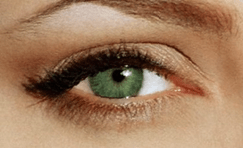

Several years ago, I caught a train for a long journey and sat on one side of a table, next to a skinny boy about 8 years old. He was sitting by the window and the two people responsible for him sat opposite. For some reason, I connected them as his carers not his parents (I never asked so I never found out). He was a wonderfully curious boy and he asked the man opposite, ‘why do we see the colours that we see? My eyes are brown so why isn’t everything brown?’ The man just smiled. The woman was more playful, ‘my eyes are green but if I saw everything as green, I’d start arguing with you!
And then because I’d been reading an article on it, I said to the lad, ‘We don’t see with our eyes, we see with our minds.’ He looked at me, wide eyed, then crunched up his face in disbelief. He ignored me after that and got caught up in some other interesting thing.
What do I mean when I’m talking about seeing? Receiving a visual image, making sense of it in terms of shape and colour and interpreting that image. Perhaps at a distance I see something brown, tubular and vertical with a green mass at the top etc and I interpret it as a ‘tree’.
What do you see below? There are at least 2 entirely different images available to you.

There’s more. While the eyes receive the visual image, the mind is deciding which images to pay attention to. We wouldn’t be able to function if we had to take in EVERYTHING we saw all the time and process it. Mark Williams, clinical psychologist and one of the founders of Mindfulness Based Cognitive Therapy explains how ‘even vision is a simulation’ in his book “Deeper Mindfulness” p20/21. The mind creates a virtual reality which is then updated when needed.
If you haven’t seen this video before about focussed attention, you might enjoy it. It is one of several
Our minds pick out what to ‘see’ by focussing on what is significant for us. It also colours what we see with our opinions, attitudes, and background experience. I think that lad had something. We are all seeing reality with different coloured lenses!
I may be contentious here but see how it lands:
Being objective is impossible.
How we ‘see’ a person, will inform how we respond to them and it may have very little to do with who they are.
………………………………………..
Seeing Stephen
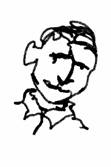
In 2000, as part of a church group, I visited a local mental health drop-in social evening. When we arrived, I separated from the others and looked for someone to talk to. The room was crowded so what did I ‘see’ in Stephen that made me want to chat with him? In my book ‘Stephen from the Inside Out,’ I describe him as, ‘in his mid-forties, slightly taller than me with glossy black hair, alert brown eyes and a disarming chuckle.’ I still couldn’t tell you exactly what drew me to start a conversation with this total stranger. I only began to understand why I stayed in contact with him, when I began to write the book.
…………………………………
Twenty years later, I wrote a description of the flat Stephen had lived in for ten years. By then Stephen had died so could not comment. I thought I’d written an ‘objective’ view but when I came to re-read that section, I realised with a jolt that it was not at all objective. What I chose to focus on and describe in detail was not what Stephen would have chosen. I wrote another description but kept both in the book to highlight the difference and give the reader this fuller image.
Just for clarity, ‘our main recording’ refers to me holding a small tape recorder by Stephen as I asked him questions about his life.
…………………………………..
In good weather we’d sit in the garden but our main recording took place in the front room, high ceilinged and squarish, with Classic FM in the background and Charlie the dog wandering in and out. The walls were cream, damp-stained stucco, decorated with a few framed prints plus photos, postcards and large handwritten signs fixed in place with Blu-Tack. The bay windows were covered by faded net curtains and framed by old brown curtains, which trailed in twin heaps on a floor of stained bare boards covered by a threadbare mat.
The door to this room was permanently held back against the wall by a fire extinguisher, and the door handle was used to hang the aprons that Stephen wore to protect his clothes while eating his meals. When you entered the room and faced the windows, the round wooden table where Stephen sat to eat was on your left. One space was held clear by an elderly placemat, while the rest of the surface was taken up by his radio, boxes of medication, cigarette packets, cards and photos, all of which was encrusted with bits of old food.
The table was pushed against the wall and had a pair of simple wooden chairs tucked under it. Between there and the window resided the TV, opposite which were Stephen’s comfy chair and coffee table. This, too, was heavily populated: cigarette packets, lighters, two large ash trays, magazines, rotas for Stephen’s carers, letters, pieces of paper, boxes of earplugs, nasal inhalers and various medications. The two heavily-laden tables were kept apart just far enough to allow a narrow passageway from Stephen’s chair to the doorway.
He smoked 30 to 40 cigarettes a day, so the room was ingrained with the stagnant smell. In the ten years he lived there, the flat received one full clean.
……………………………
That is one way of describing Stephen’s front room. It tells you quite a bit about my view, eg: ‘stained bare boards,’ stuff Blu-Tacked to the walls and piled on the tables ‘encrusted with bits of old food’. This is not how Stephen would have described his flat. So I wrote again, putting on Stephen’s lens.
…………………………
Stephen would have said his flat was ‘special, very special’ because he loved this flat. It was his precious home, and his front room was his safe place. The prints on the wall were ones he’d chosen and the postcards all came from long-standing friends. The pictures carefully blu-tacked on beside them had been cut out from the Country Life calendars that he asked me to buy him each year; prancing lambs and foxes, eagles in flight. Carers had sellotaped encouraging notes on the wall, like ‘Smile Stephen – Think happy 😊’, and the photos balanced on the tables and in front of the TV were of loved ones, his dog and snaps I’d taken of him on outings with my family. The radio and TV were essential: sources of information, humour and sublime beauty. What would he have done without music?’
How different does it feel to read this description?
Over the course of eighteen years, Stephen slowly taught me another way of seeing….

[Taken from the poem ‘The Teachers’ by John Bell]
…………………..
Coming back to that boy on the train and the people who sat opposite. Why did my mind snag on them being his parents? Physically they could have been a fit. When I reflect on it, it was the lack of some intensity of connection which is my experience of being a parent. And by that I don’t necessarily mean wonderful patience and care. It could have been irritation, over concern, shushing him, beaming with pride, insisting one of them sit next to him… Or it could be that my sense of what a parent is, is limited and my brain just didn’t recognise it.
The range of what we think and do
is limited by what we fail to notice.
And because we fail to notice
there is little we can do
to change
until we notice
how failing to notice
shapes our thoughts and deeds.
By: RD Laing
 Falling Awake to Life - Through Story, Myth and Mindfulness
Really good! Really liked it. Thank you. xxxxx
Web-site: http://www.timsteadmindfulness.org
On Wed, Nov 12, 2025 at 12:03 PM Falling Awake to Life – Through Story,
LikeLike