ALL YOU NEED IS LOVE

Why can’t we just love one another?

The Guardian Newspaper at one stage years ago, offered the big questions for readers to respond to.  One of them was ‘Why can’t we just love one another?’ 

Various answers came in – someone in Newcastle replied, ‘because some people come from Sunderland.’

What would you reply? Because some people are dangerous, selfish bastards, murderers, dictators? or billionaires, gypsies, crusties, communists, fascists, woke? maybe they belong to a particular nationality or religion? Or maybe they hurt you deeply.

How do we reach across that divide? Or do we even want to? As I said in my previous blog, we all have our different lenses with which we see the world and other people and that affects how we respond to them.

all images created by my niece E.K.Mosley for my book ‘Stephen from the Inside Out’

In my 20s I was one of those who thought that all you need is love.  I was inspired by Jesus who said ‘love one another as I have loved you.’  I lived in an intentional Christian community on the North Devon Coast for 2 years and then worked for 3 years in a Christian residential drug rehab for women. Many of them had been thieves and/or prostitutes to fund their drug habits.  One told me she had sold her mother’s 3-piece suite while her mother was out.  Many had been sexually/physically abused as children. Most, if not all of them, had begun serious drug habits by the age of 12 or 14.  One told me of injecting bleach. Then and now, my body tenses with horror at the thought of what drives a person to do that.

Yet…. Yet… She is the one who gave me the mug below.  The mug which says ‘a beautiful day begins with a little love.’  I still have that mug and if the woman who gave it to me ever reads this, thank you, D.

The other side has a picture of a rainbow.

Yes, some found better lives, but many left to return to drugs, some died. The suffering was deep.

Later I married Tim, moved, worked as secretary and was also part of a church that housed homeless people in the church building. A few would join us for the daily evening services. They were all welcomed.  We would stand in a circle round the altar in the middle of the large gloomy Victorian church with the vicar blessing the bread and wine. We’d be a motley collection of maybe 15 to 20 people: quiet elderly ladies, unwell people muttering, people in work clothes, monks in holy robes, and the occasional drunk man (almost always men) swaying slightly to stay upright and making inappropriate comments. One told me he didn’t expect to live till he was 30. He never did.  I didn’t know anything about his background but I did see the scars on his arms from cutting himself.

My faith at the time, held out that love conquered all, that in ‘the end’ it would all work out. The fact that I was part of a group of people, a church community that welcomed everyone helped me sustain this. But I still felt like screaming at times.

After 4 years, Tim and I left that city, moved 3 times and had 3 children.  6 years later we moved to a suburban area.  By then Tim was a church vicar. It was here that I met Stephen who was under section at a local psychiatric hospital.

I invited him to coffee once a week and occasionally took him to the church but people there avoided Stephen. He had a wary institutional look, wore baggy clothes with cigarette burns. He was tense and restless, would ask people for money and mutter dark things under his breath.   I felt indignant on his behalf but I was also finding him challenging.  He wanted to visit or ring me whenever he wanted. Guilt told me I should say yes but Self Preservation was putting up a fight.

Below is an extract from ‘Stephen from the Inside Out’ chapter 2 (please note that I read chapters back to him and he commented. These comments are in italics):

……………………………………………………………………………..

Stephen kept reminding me I was a Christian, that I was following someone who preached the way of love. ‘Love your neighbour as yourself’, ‘If someone asks, give’. I’d been a fully paid-up Christian for 17 years. What was the matter with me?

In my mind, rather floridly, the Guilt Queen, 
meticulously dressed, appears;
one smart shoe firmly on the windpipe of Self-Preservation.

No-one was helping to share the load and I couldn’t lift the weight.

The Guilt Queen purses her lips:
‘no-one said it would be easy, Susie’.

One Sunday I was standing on the drive of our house with Stephen. He was expecting to come in. I waffled. I fumbled. I said very nicely that it wasn’t a good time for him to come over today. He wasn’t taking the hint. He glowered at me, grumpy and miserable. He didn’t want to go back to the hospital. It was horrible there. Horrible. Horrible. Horrible. Did I know how horrible it was?

The Guilt Queen stands behind Stephen,
inspecting a booklet entitled,
“Hypocrites of the 20th Century”.
She holds Self-Preservation in a headlock.

Did I know how horrible it was?Yes, I knew, yes, yes, yes of course… He pulled his trump card: ‘If you were Jesus, you’d invite me in’.

Suddenly Self-Preservation emits an elemental roar.
Guilt Queen is thrown. White noise.

‘I’m not bloody Jesus!’  I screeched into his face, before storming off, slamming the front door and bursting into tears.

Tim, my lovely husband and also vicar of the church, offered some basic theology,

‘You’re right. You’re not bloody Jesus.’

He then added, ‘If Stephen turns up whenever he wants, you’ll end up being overwhelmed and shutting him off for good and then nobody wins. Lay down some ground rules.’

Stephen surprises me by leaning forward and firmly agreeing with this: ‘Obviously, I needed some ground rules. I didn’t have to go back there. I was informal, I could have gone somewhere else. There was no excuse for my behaviour. All I can do is apologise. Quite frankly, I was a menace.’ He warms my heart; I hadn’t even thought of the other options available to him.

Without that piece of crucial advice, my connection with Stephen would never have survived.

………………………….

Why can’t we just love one another?  What do we even mean by love? Jesus’ version was pretty hard core although he is miss quoted. He said ‘love one another as you love yourself’ – that last bit gets lost.

I grew up with a mix of love being about ‘being nice’ and also ‘being kind to those less fortunate than myself’ and very little about loving myself because (and it was true) I was very fortunate.

As a result, I didn’t feel able to be direct, so relied on people to know social etiquette: not overstaying their welcome, not ringing me at 2am or asking me for money.   I did not understand that love might mean holding my own, being clear, even if I am ‘more fortunate’ than them. That love might mean, knowing that I too have needs and vulnerabilities. Perhaps most important, that maybe love means acknowledging I’m part of the mess, not above it all.

It was a vital awakening and it took me years to wake up to the fact that the problem was not Stephen – Stephen could not be anything other than he was. That was his gift.

Stephen never did ‘get better.’  He lived intensely.  He suffered and he enjoyed the moments that he could.  Below are 2 poems of his, one on a good day and one on a bad day:

POEM ON A GOOD DAY

'Ah the radiant beauty and scintillating charm

of the resplendent flowers, illuminating

the tranquil propensity of the garden

in the bright shining sun.

The persistently beautiful rhythm of the birds

chanting their ecstatic songs.'

Stephen
AND ON A BAD DAY

'This Life –

ah this wretched Life –

for me it seems to have no purpose, no point –

just an agonising struggle –

and I am not strong enough to overcome.

Alas, I am afraid I am not.'

Stephen

So… what about ‘all you need is love’?  Do I still think that? no. I still go with ‘Love others as you love yourself,’  but I see it as a practice.  We practise loving ourselves and others.  We practise receiving love from others. And we practise not expecting an outcome or thanks.  That, in my view is a more than a life’s work.

'In our love,
however little,
we create a web
which breaks a person's fall.'

S.Stead

IMBOLC/CANDLEMAS – SPRING IS COMING!

The first of February!  Imbolc in the Celtic calendar marks the beginning of spring, the light returning, life emerging.  A time for inspiration and new beginnings, allowing the life in us to push through all that hard cold earth!  If a snow drop can do it… so can we.


‘Many, many welcomes,
February fair-maid,
Ever as of old time,
Solitary firstling,
Coming in the cold time,
Prophet of the gay time,
Prophet of the May time,
Prophet of the roses,
Many, many welcomes,
February fair-maid!’

The Snowdrop, by Tennyson


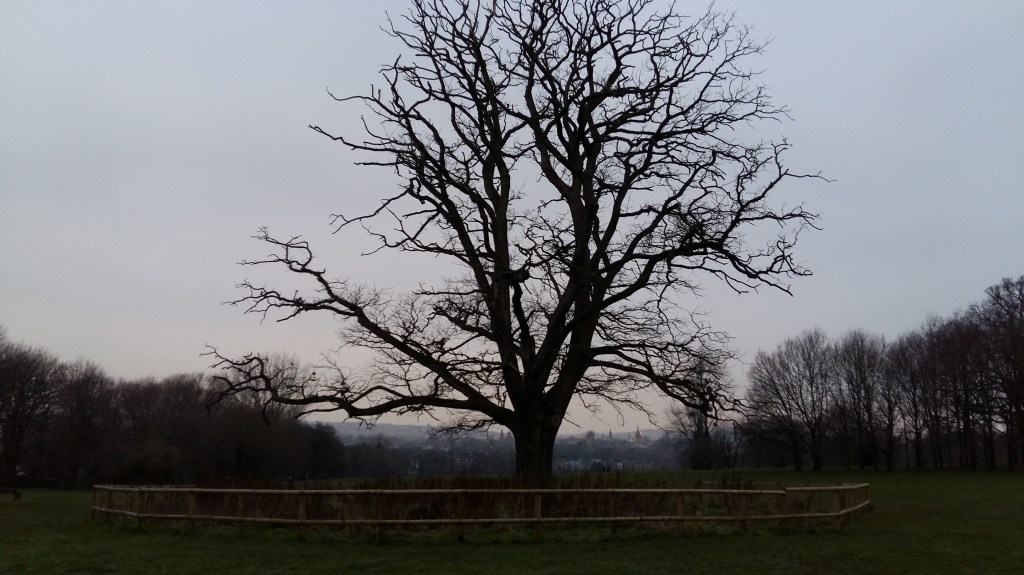
This morning, Monday 1st February,  at 6.30am our household gathered in the trees at the top of South Park in Oxford.  It wasn’t fully dark because of the various lights from the roadsides and coming up from the city but it was grey and chilly and very beautiful with the trees patterning their branches against the dark sky.

Someone read a poem and we sang a chant:

Light emerging, Spring is near,  life emergent, we are here.

After this we went our separate ways to find a place to stand, to notice nature and the very slow lightening of the sky.  We had thirty minutes before rejoining one another.

I felt an exhilaration being up this early, no-one else in the park, only the distant movement of occasional cars on the roads.  The birds were welcoming a daylight that had not arrived, some with such sweet staccatos and others like the rooks, cackling and bawling out their hellos!

I found my way to the huge oak at the centre top of South Park which overlooks the city and I stood leaning against her, feeling her rough support,  feeling the solid, rooted homeliness of this being.  I asked her for any advice and the words that came to me were, ‘heal the roots’.

I thought of the roots of the tree, how deep and wide they run..  The roots are vital to the life of the tree but also to its connection with other trees.

Over the last few years the human race has been discovering that trees communicate with each other and share nutrients through their roots and through fungal networks. The fine, hairlike root tips of trees join together with microscopic fungal filaments to form the basic links of the network, which appears to operate as a symbiotic relationship between trees and fungi. This network has been called ‘The Wood Wide Web’!


Peter Wohlleben has written a beautiful book entitled “The Hidden Life of Trees” and he says that all the trees  ‘in every forest that is not too damaged, are connected to each other through underground fungal networks. Trees share water and nutrients through the networks, and also use them to communicate. They send distress signals about drought and disease, for example, or insect attacks, and other trees alter their behavior when they receive these messages.’  (https://www.smithsonianmag.com/science-nature/the-whispering-trees-180968084/)


It seems to me that we the human race could do with healing our roots, healing the vital connections that are between us.  One of the ways we might  do this is to start digging up our certainties, the ones that crush the possibility of connection, of love, of hope –with ourselves, with others and with this good earth.  I am hoping to do some gentle digging over this year.

THE PLACE WHERE WE ARE RIGHT

Yehuda Amichai (translation by Chana Bloch and Stephen Mitchell)


From the place where we are right

Flowers will never grow

In the spring.


The place where we are right

Is hard and trampled

Like a yard.


But doubts and loves

Dig up the world

Like a mole, a plow.


And a whisper will be heard in the place

Where the ruined

House once stood.


‘You do not have to be good’ – a tribute to Mary Oliver, poet

‘You must not ever give anyone else the responsibility for your life’


Mary Oliver, U S poet, Pulitzer prize winner and inspiring human being, died on 17th January aged 83.  One of her most famous poems, “Wild Geese” begins:

‘You do not have to be good.

You do not have to walk on your knees

for a hundred miles through the desert repenting.’


You do not have to be good – Every time I read that sentence, my shoulders drop in relief.  For over 12 years now, my intention has been to become more ‘real,’ rather than ‘good’ and for the last 5 years the poems of Mary Oliver have kept me company.  Like many others, I’ve been brought up to be ‘good’ and not to attend to my needs or pay attention to what I want in life.  As a result, I would not ask directly for what I wanted and often didn’t even know what I wanted.  Instead my tendency was towards the ‘passive aggressive’ approach: ‘I won’t tell you what I need but I’ll make it clear how disappointed I am that you didn’t work it out through ESP and do it anyway.’

But I’m changing!

Mary Oliver’s poem, ‘The Journey’ is that call to listen to yourself.  It begins:

‘One day you finally knew
what you had to do, and began,
though the voices around you
kept shouting
their bad advice —
though the whole house
began to tremble
and you felt the old tug
at your ankles.
“Mend my life!”
each voice cried.
But you didn’t stop.


You knew what you had to do…’


For some of us the bad advice, the voices calling, are mostly external and for some its all inside our heads but those voices, that advice can be so strong, so undermining of our confidence in our own voice, our own experience.

Its painful recognising our patterns of response and changing them but it is also liberating and delicious when we realise we are not trapped!

Mary Oliver was a gay woman who found her life partner, Molly Malone Cooke in 1964,  ‘I took one look and fell, hook and tumble’.  They lived together for over 40 years before Molly died in 2005.  After she died, in ‘A Pretty Song’ Mary writes ‘From the complications of loving you, I think there is no end or return.’

Mary Oliver never explicitly wrote about this side of her life but I would recommend  a read from  https://lithub.com/on-the-overlooked-eroticism-of-mary-oliver/ written by Jeanna Kadlec.  Jeanna remarks how Mary Oliver’s poems gave her hope as a young gay woman:

‘For me, someone who grew up in the evangelical church, the experience of reading “Wild Geese” has often been about receiving permission to desire within my own body: I do not have to be good; I do not have to repent.

‘You only have to let the soft animal of your body love what it loves.’

Whatever our faith/non-faith position is we all have an idea of what ‘good’ is that matters to us. It might be being good ‘morally’ or good in relationships or ‘following God”, or changing the world for the better in one way or another.  But unless we begin by seeking authenticity, the ‘goodness’ lark will either whiplash back on us (what a hypocrite/lousy mother/shit friend I am, etc|)  or the whip will land on others (they ‘should’ be…) .  So instead when I remember, I practice being real, bringing awareness and acceptance of myself as I actually am, having compassion for this human being here at this moment. It’s a life’s work.

For Mary Oliver, her work was to love and be amazed by this world.  It was mostly the natural world but not always.  In the poem ‘Singapore,’  Mary Oliver finds herself in the airport toilet when she notices a woman cleaning ashtrays in the toilet bowl:

‘Disgust argued in my stomach

And I felt in my pocket, for my ticket.

A poem should always have birds in it….’

But she stays and then,

‘When the woman turned I could not answer her face.

Her beauty and embarrassment struggled together and

neither could win.

She smiled and I smiled.  What kind of nonsense is this?

Everyone needs a job.’

And later


‘I don’t doubt for a moment that she loves her life.

And I want her to rise up from the crust and the slop

And fly down the river.

This probably won’t happen.

But maybe it will.

If the world were only pain and logic, who would want it?

Of course, it isn’t.


Neither do I mean anything miraculous, but only

The light that can shine out of a life.  I mean

The way she unfolded and refolded the blue cloth,

The way her smile was only for my sake; I mean,

The way this poem is filled with trees and birds.’


I want to finish with one of Mary Oliver’s poems in its entirety.  It is called “When I am among the Trees”.  Trees don’t worry about being ‘good’,  they simply ‘are’ what they are, with their roots deep down in the soil connecting with this world and their branches and leaves reaching out to the light.  If you haven’t already done so, try standing against a tree for 20 minutes, feeling the bark supporting your back, looking up through rich layers of leaves or perhaps bare branches sharp against the sky, smelling the air, listening to sounds, breathing. Its a gift.


When I am among the trees,
especially the willows and the honey locust,
equally the beech, the oaks and the pines,
they give off such hints of gladness.
I would almost say that they save me, and daily.

I am so distant from the hope of myself,
in which I have goodness, and discernment,
and never hurry through the world
but walk slowly, and bow often.

Around me the trees stir in their leaves
and call out, “Stay awhile.”
The light flows from their branches.

And they call again, “It’s simple,” they say,
“and you too have come
into the world to do this, to go easy, to be filled
with light, and to shine.”


Thank you, Mary Oliver, for the light you have shone on my life.


Breaking Free and Shedding a Skin – Part 2

It’s worth it!

Sometimes in order to break free, to grow, we need to shed the skin of our lives. Snakes shed their skins as they grow.  Maybe they have something to teach us.

Back in October 2017, after 23 years, Tim and I decided that we’d stop being a vicar and vicar’s wife.  In April this year we left an entire way of life, a community and the vicarage where we’d lived for the last 10 years.  In March, after further reading on how snakes shed their skins, I wrote the poem below.


SHEDDING YOUR SKIN – PART 2


The skin has come off.

It lies there coiled on the floor.


The hardest bit was starting

At the head.

Rubbing at 30 years of habit.

Worrying it, dislodging

thick protective certainties.

Finding the sharp necessary stones

To pierce the old skin.


That first breaking!

That relief!

                      Beginning to breathe easily                     .

Smarting with the rawness.

Then, seeing more clearly

How trapped I’ve been.

Rage rising

Spitting out of me, spurring me on.


Tearing, scratching, I look around for help,

Some cannot see the problem,

Others irritate and poke.

But there are those who celebrate,

Thank you!

Affirming, soothing, loving,

They apply a gentle pressure for me

To pull against.


Then the slow, slow, moving

Wrinkle by wrinkle out of the casing.

Cell by cell

Whole sections peeling off gloriously

While others snap and tear.

The tail snatches at the last of the skin

Trying to find a purchase

But it’s too late. I’m out.

I am out.


I stretch and feel the rippling flex of flesh

No tightness at the eyes.

Or pressure on the chest.

The vast expanse of ‘new’

Is fresh and frightening.


The old skin lies useless,

dry, translucent,

Beautiful designs

Etched into the calcified cells.


I need to rest and hide awhile.

I leave the old skin behind.


I don’t look back.


Breaking Free and Shedding a Skin – Part 1

Do you ever get that feeling? You want to break free, move-on but you feel trapped, you don’t know how to make the break, what to do.  Four years ago, I was in that place.

In November 2014, I wrote:  I wake today and the voices come from all directions in disarray.  I should have, why didn’t I, he’s so much better,  I feel cramped,  I feel trapped,  I’m not trapped,  I’m fortunate, lucky.  I’m stressed but I can’t be stressed,  I’m tired but I have no right to be,  I’m a failure but I was given all the chances. 

In December 2014 I wrote this poem:


ON SHEDDING YOUR SKIN

I was down and low.

My life an untidy room with

No Door.

But inside I’m growing

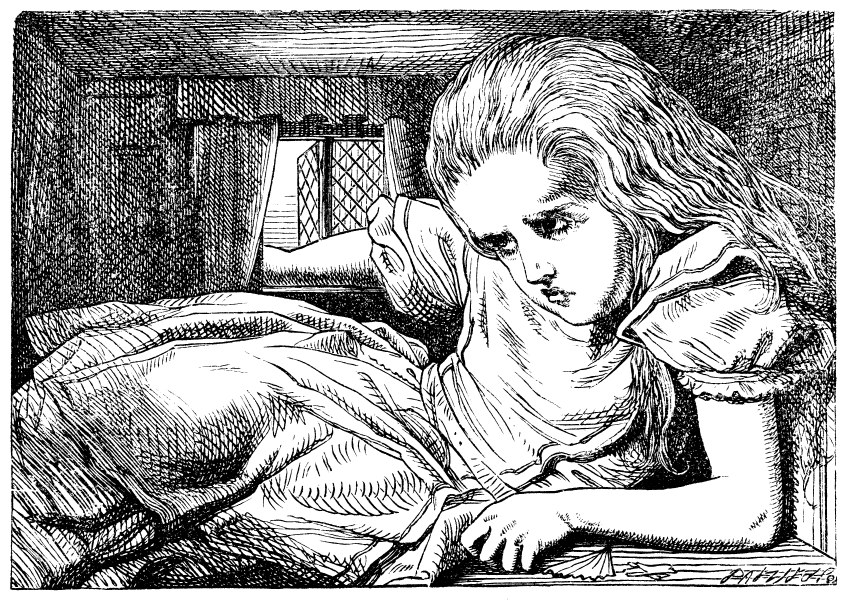
Like Alice.

The room is getting too small.

Way too small.

It has become an old skin

That has to go.

I shake my head and start to scratch.

[https://wonderopolis.org/wonder/why-do-snakes-shed-their-skin]


I didn’t know how my life was going to change or how I would shed this skin but it dawned on me that I had shed skins before. That last one with all the intricate interplay of lines – the choppy, changing patterns of young motherhood,  a stressed partner with his hair cropped short, religious certainties, Duplo bricks, primary school, children’s boots.  The smell of my daughter’s breath in her first bed.

My skin.

And now this one. By the end of 2014, my last child had turned 18, my partner had a beard and long hair and was sorting his stress through mindfulness. I’d been creating drama, organising alternative evening services in church, working with kids, chasing teenagers, worrying late at night, chafing at the theology of church, angsting at my age and lack of income.

Youtube videos tell me that to help a snake get started, give it a nice long bath or some E45 to soften the skin.

My preparation had been to practice mindfulness for the previous 3 years.  I’d started it because I wanted to ‘fall awake’ to my life (Jon Kabat-Zinn).  The thing about ‘falling awake’ is that you wake up both to the good and the bad.  Fortunately the non-judgement and compassion of mindfulness softened me enough to allow me to look at what was going on.  But where to start?

With snakes the shedding has to begin with the head.  They push their heads against any hard-scratchy surface to get some leverage, some motion.

I chose some sessions with a psychotherapist.

Snakes can get vulnerable and aggressive during the process.

Yup.


I’d been brought up in an ex-pat patriarchal setting.  There were 2 cardinal rules for a woman:

  • Other people come first and
  • Never openly confront or upset people even if they’re screwing you over – its rude.

Becoming a Christian and a vicar’s wife re-enforced these. Jesus said ‘love others as you love yourself’ but the second part of the sentence always got guillotined.

As I became more aware of this, the irritation grew and the skin felt tighter.  And tighter.

For several years I’d been angry with the Church’s attitude to women but now I also woke up to the realisation that all talk about God was male.  And I’d bought into this for over 30 years.

The shed had begun and it began in my head.

I was waking up.


Moving House mindfully…. sometimes

3 Weeks ago we moved house. 3 weeks ago my husband stopped being a vicar. 3 weeks ago we walked into our own home, we walked off the edge of our old life… Here are some mindful and not mindful moments …..

GOING HOME
Always going home,
Always planting the seed
Always opening, allowing
The new growing shoot.
Never so sure what it will be
No one
Telling me
Who I am.
Not even me.

MOVING HOUSE – SELLING AND BUYING
I’m fine
Really
It’s just
The others.

The sellers will renege
They’ll use my clumsy words against me.
The buyers of our flat will drop out
Or drop the price.
The estate agent doesn’t like me.
The solicitor doesn’t care.
The neighbour will block me.
The other neighbour
the basement one,
Will throw a wobbly and ruin everything.

All this running through
My nightmare mind.

I sit still and notice
There is a common thread
And underneath I hear a child crying
And I know
That no-one else can comfort her
But me.

I’m fine
Mostly.
And this is life.

NEW HOUSE

In our new pond the tadpoles
Are seething.
My anxieties fix on visions of frog city
So I collect some in an empty yoghurt pot
And throw them on the raised border
But I cannot shake the shame of murder.
I go to buy goldfish to eat them instead
But apparently the goldfish are ‘not ready’
and anyway they don’t eat tadpoles.
Visions of garden frog hell encompass me.

And then I laugh

Is that as bad as my visions of hell can get?

Later I’m told not to worry
The tadpoles will eat one another
If nothing else.

Apparently I do not need
To interfere.
Simply allow life.

Well that’s a thought.

VOICES OF PASSION – DRAMA FOR GOOD FRIDAY

WHERE IS GOD IN SUFFERING AND LOSS?

It was Corrie Ten Boom, a Dutch christian who ended up in Ravensbruck Concentration camp during the Second World War for helping Jewish people, who said:

“There is no pit so deep that God’s love is not deeper still.”

On Good Friday this year, we’re going to follow two people who were there on Jesus’s walk to the cross and his death: Simon of Cyrene, who was forced to help carry Jesus’ cross, and Mary, Jesus’s mother, who stayed with him and watched him die. We will also explore two modern counterparts to Simon and Mary. These modern stories are fictional but they’re based on my own and friends’ experiences.

Modern Simon or Simone as I’ve called her is a carer having to look after a sick old man, Bill. About 12 years ago I knew a beautiful free-spirited elderly woman called Marian who succumbed to dementia and I cried when I had to drive her to the care home where she was to be locked in. The character of Bill is based on her.

Modern Mary is a woman who is told her baby will not survive after birth. Years ago I read a newspaper article where a couple in hospital, were given their newborn baby, told she would not survive more than an hour and left there. A good friend of mine who has suffered a great deal in the process of seeking to have children, helped in editing this piece. Another good friend who knows about suffering will play the part.

If you’re in Oxford please come along. There are four actors: 2 are professional, 1 is at drama college and 1 is simply the right person for the part. Our church music group will sing some gentle songs to accompany this.

The drama will take place from 1pm to 1.30pm at Holy Trinity Church, Headington Quarry, Oxford OX3 8LH

There will be a Good Friday service in the church from 2pm for those who wish to stay.

poster 2018 V of P pdf

THEY HAVE NO WINE – LIVING A CREATIVE LIFE

For the first and probably last time in my life, I was invited to preach a sermon a few weeks ago and the subject was the ‘Wedding at Cana’, a story told by the gospel writer, John about a particular wedding where Jesus was said to turn 120-180 gallons of water into wine…. And I decided to speak on Wine and the Creative life.

For many people ‘miracles’ are problematic and turning water into wine raises some practical issues 😊. However, if you’re happy to view it as you might one of the great myths and enjoy the story and the meaning that John wants to convey then this is a wonderful story about looking to live life to the FULL. It’s also funny.

This story helped me to find my own sense of value as a creative person having constantly struggled with the feeling that ‘being creative’ is just a nice ‘extra’ and insignificant compared with really important things like ‘helping people’ and ‘saving lives.’ Yet what are we saving peoples’ lives for? Just to eat ‘bread and water’?

No matter how poor we are, whether financially, emotionally, physically, spiritually etc – we need joy, we need pleasure, we need to be creative, we need richness in our lives, we need hope. This is what makes life worth living.

The audio below comes to about 16 minutes and includes the reading of the gospel story. I hope you enjoy it and find encouragement here.

Erasing and Recalling the past – Hong Kong – Part 2

One of the 10 tourist wonders of HK

‘It will have a changed a lot!’ people advised when I said I was re-visiting Hong Kong after many years. As if this wouldn’t have occurred to me. Nobody asks if I have changed.

“Did you know that this lady’s father was an Executive Director of the Bank?” Chris tries to interest and impress a Chinese staff member at one of the 10 tourist wonders of Hong Kong – the Hong Kong Bank Building. The staff member nods politely. I’m squirming. It’s our first full day and we’ve been on the concourse below viewing photos and information on the history of the Bank. Chris hasn’t noticed that the only photo of white British HSBC staff is during the Japanese occupation – defeated, bedraggled gentlemen being pushed along at gunpoint by Japanese soldiers. The ‘Great British Colonial Period’ has been erased.

We’re following a tourist trail and we head off up Bank Street. I tell Chris of a memory that haunts me. It’s like a dream. I’m maybe 11 or 12 years old and I’m walking down Bank Street with the chauffeur, Ah Fan, in his grey uniform with his smart cap. That would be enough to deal with – walking down Bank Street with the chauffeur. But there’s more. As we walk down I become aware of a scrawny beggar on the pavement, squatting on some cardboard. Beside him, a dented bowl for money. He has no fingers. The chauffeur and I walk passed.

If only I could erase that piece of history. Today no beggars sit on Bank Street. In fact I’ve seen very few anywhere. I’m grateful.

DSCN2738

As we walk on, something grips me. A sense that I ‘know’ this place. Not in an intellectual, ‘Oh, I remember that’ sort of way… but a warm physical buzz…. my body remembers this place. We’ve been following a map but I insist we change direction. There will be old stone steps on the opposite side of the road – steps I walked up often. As we approach they materialise and now I remember they will lead to the cathedral, the same cathedral where the flocks of widows waited for us after the service. They aren’t there today. Where have all the poor gone? Has Communist China done a better job of providing for them?

After a steep, sweaty climb we’re there. I don’t normally like cathedrals, but I like this one. It’s not big and it has a comforting feel, almost womb like with the smell of mahogany and old fans whirring soothingly above. On the right transept is a stone font where my younger brother was baptised.

The cathedral claims to have a maze which turns out to be a set of faded lines on cracked tarmac outside. I want to mark the beginning of this pilgrimage, so despite the bemused looks from a lunch time couple, I take slow steps, following the maze. The path teases me. I seem to be almost at the centre and then I’m away, right on the perimeter, apparently going nowhere. The path rambles back and forth and I become impatient and embarrassed at how stupid I look. Finally, it dives straight to the core and I’m there. Of course, this is what pilgrimage will feel like. As I stand there, it comes to me that Hong Kong was the birth place of my faith. This cathedral was the beginning and 20 years later this land and these people would give me the gift of a faith that would change my life… I had forgotten.