NEW YEAR – LESSONS FROM A STAIRLIFT

My mother is 96 years old and still lives in her own home supported by carers and essential items like a stairlift that takes her up her old set of stairs around the corner near the top, delivering her finally at the landing.  It looks like the one below.

Anyone who has ever used stairlifts knows that they are not speedy but Mum rang up a few days ago, worried, as the stairlift had gone on a ‘go slow’ on her way up to bed the previous night, even stopping at a couple of points before carrying on.  She didn’t want to be left stranded half-way up the stairs as she can barely walk, let alone climb stairs.

The following morning, she and the carer (Gloria) had rung the company to get an engineer to come out.  We didn’t have insurance so they needed pre-payment of the £150 call out fee first.  I have financial power of attorney so I rang them up, waited for the requisite 10 minutes on the phone and was thinking of just using the website, which the automated voice kept urging me to do, when finally, a real voice came on the phone.  Or at least it sounded real.

Waiting for someone to answer proved a very useful pause. 

Pauses are one of the most useful things that you can do in life before making a decision.  Especially mindful pauses.  I don’t always remember.

In that pause I had an idea.

The voice was still rather automatic, asking my details, preparing to take payment when I asked if there was something we could actually do our end first.  I hit gold.  The voice lit up and became an animated and helpful person 😊. Yes, we could do something, Hurrah!

After explaining to me in detail about using a remote control, which gave me heart palpitations because I had no idea where it was and hadn’t see it for over a year, he then changed tack and it turned out we didn’t need a remote control at all.

‘There’s a panel on the stairlift which shows up a code and if something is wrong there’ll be a J3 or an E something or possible another number.’

He then went on to say that from my description it was probably a J3 problem.   He explained carefully, not in techno speak but in easy, homely language (Thank you!):

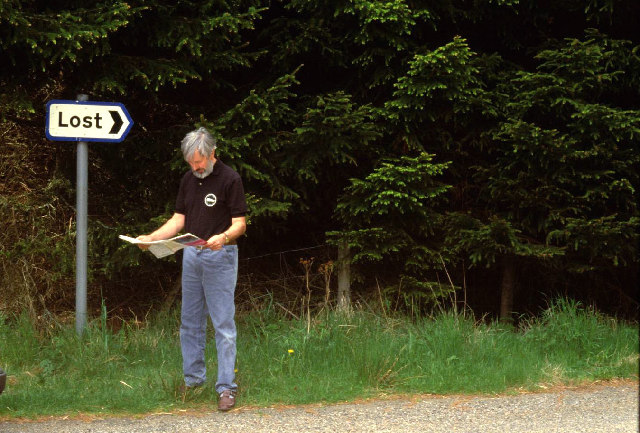
‘The stairlift has to go around a corner to get up the stairs.  In order to do that, it has to have a map in its system.  Sometimes the map disappears and it gets lost.’

It sounded rather sweet that a stairlift could get lost.

He carried on:

‘Because it is lost, it goes very slowly because it doesn’t know where the corners are and it will sometimes stop.  It can also tip slightly if it’s expecting to go round a corner.’

Why do I feel so much empathy for this stairlift?

He finishes:

‘For it to reset, it needs to go back to the top of the stairs because that is “home”.  Once it is there it will beep and then reset itself.’

The stairlift just needed some help getting home.  I know that feeling.

It turned out to be a team effort. 

Having thanked him profusely, I then rang Gloria and we had to go through the whole procedure on the phone as I live 100 miles away.  Gloria discovered that she had no idea how to use the stairlift.  I know it should be easy but I’d also been stymied by it, when visiting at Christmas.  It was my 96-year-old mother who was the expert here, so I waited while Gloria helped my mother out of her chair, into her wheelchair, and then over to the stairlift.

Mum’s job was to keep the stairlift moving while Gloria followed her up the stairs, watching the numbers and shouting down the phone at me

‘It’s saying A2’

‘that’s the right code, the man says’.

They got to the top and then repeated the process going down.

‘It’s saying A3’

‘That’s correct for going down.’

The stairlift had worked perfectly on both journeys.  It became evident that it had reset the previous night when my mum parked it at the top. We saved £150 and it’s been fine ever since.

It just got a bit lost and it needed to get home to regain its bearings.

That is my story for the New Year, and indeed for anytime that you notice you are feeling lost and overwhelmed… (by personal stuff or world news).

Now take a moment to recognise what state you are in: Maybe you’re going slow, stopping, unsure of your bearings.

What you need to do is come home.

What a relief. 

Instead of rushing out to find someone or something to fix you (often at high cost), you simply come home.

How do we come home?

You know. Listen to yourself.  You have your ways. 

Some of my ways of coming home are: meditation, walking in nature, especially amongst trees or by the sea. Also, poetry, music.  Also taking time to cook a good meal, snuggling up with someone I love and a good book.  Sometimes I need to be on my own, sometimes I need to touch base with someone else.

This morning, I was feeling lost, a minor swirl of frustration, mainly with myself.  I recognised it.  My reset button this morning was to go and find Tim, who hugged me and brought me home.

Below is a poem that I love.  It is a deeply embodied, coming home.  It is by Jane Hooper. I cannot find a book source.  I quote the first part of it.

Please Come Home
by Jane Hooper


Please come home.
Please come home.
Find the place where your feet know where to walk
And follow your own trail home.

Please come home.
Please come home into your own body,
Your own vessel, your own earth.
Please come home into each and every cell,
And fully into the space that surrounds you…
Please come home.
Please come home to trusting yourself,
And your instincts and your ways and your knowings,
And even the particular quirks of your personality.
Please come home.

Please come home and once you are firmly there,
Please stay home awhile and come to a deep rest within.
Please treasure your home. Please love and embrace your home.
Please get a deep, deep sense of what it’s like to be truly home.
Please come home. Please come home.


ALL YOU NEED IS LOVE

Why can’t we just love one another?

The Guardian Newspaper at one stage years ago, offered the big questions for readers to respond to.  One of them was ‘Why can’t we just love one another?’ 

Various answers came in – someone in Newcastle replied, ‘because some people come from Sunderland.’

What would you reply? Because some people are dangerous, selfish bastards, murderers, dictators? or billionaires, gypsies, crusties, communists, fascists, woke? maybe they belong to a particular nationality or religion? Or maybe they hurt you deeply.

How do we reach across that divide? Or do we even want to? As I said in my previous blog, we all have our different lenses with which we see the world and other people and that affects how we respond to them.

all images created by my niece E.K.Mosley for my book ‘Stephen from the Inside Out’

In my 20s I was one of those who thought that all you need is love.  I was inspired by Jesus who said ‘love one another as I have loved you.’  I lived in an intentional Christian community on the North Devon Coast for 2 years and then worked for 3 years in a Christian residential drug rehab for women. Many of them had been thieves and/or prostitutes to fund their drug habits.  One told me she had sold her mother’s 3-piece suite while her mother was out.  Many had been sexually/physically abused as children. Most, if not all of them, had begun serious drug habits by the age of 12 or 14.  One told me of injecting bleach. Then and now, my body tenses with horror at the thought of what drives a person to do that.

Yet…. Yet… She is the one who gave me the mug below.  The mug which says ‘a beautiful day begins with a little love.’  I still have that mug and if the woman who gave it to me ever reads this, thank you, D.

The other side has a picture of a rainbow.

Yes, some found better lives, but many left to return to drugs, some died. The suffering was deep.

Later I married Tim, moved, worked as secretary and was also part of a church that housed homeless people in the church building. A few would join us for the daily evening services. They were all welcomed.  We would stand in a circle round the altar in the middle of the large gloomy Victorian church with the vicar blessing the bread and wine. We’d be a motley collection of maybe 15 to 20 people: quiet elderly ladies, unwell people muttering, people in work clothes, monks in holy robes, and the occasional drunk man (almost always men) swaying slightly to stay upright and making inappropriate comments. One told me he didn’t expect to live till he was 30. He never did.  I didn’t know anything about his background but I did see the scars on his arms from cutting himself.

My faith at the time, held out that love conquered all, that in ‘the end’ it would all work out. The fact that I was part of a group of people, a church community that welcomed everyone helped me sustain this. But I still felt like screaming at times.

After 4 years, Tim and I left that city, moved 3 times and had 3 children.  6 years later we moved to a suburban area.  By then Tim was a church vicar. It was here that I met Stephen who was under section at a local psychiatric hospital.

I invited him to coffee once a week and occasionally took him to the church but people there avoided Stephen. He had a wary institutional look, wore baggy clothes with cigarette burns. He was tense and restless, would ask people for money and mutter dark things under his breath.   I felt indignant on his behalf but I was also finding him challenging.  He wanted to visit or ring me whenever he wanted. Guilt told me I should say yes but Self Preservation was putting up a fight.

Below is an extract from ‘Stephen from the Inside Out’ chapter 2 (please note that I read chapters back to him and he commented. These comments are in italics):

……………………………………………………………………………..

Stephen kept reminding me I was a Christian, that I was following someone who preached the way of love. ‘Love your neighbour as yourself’, ‘If someone asks, give’. I’d been a fully paid-up Christian for 17 years. What was the matter with me?

In my mind, rather floridly, the Guilt Queen, 
meticulously dressed, appears;
one smart shoe firmly on the windpipe of Self-Preservation.

No-one was helping to share the load and I couldn’t lift the weight.

The Guilt Queen purses her lips:
‘no-one said it would be easy, Susie’.

One Sunday I was standing on the drive of our house with Stephen. He was expecting to come in. I waffled. I fumbled. I said very nicely that it wasn’t a good time for him to come over today. He wasn’t taking the hint. He glowered at me, grumpy and miserable. He didn’t want to go back to the hospital. It was horrible there. Horrible. Horrible. Horrible. Did I know how horrible it was?

The Guilt Queen stands behind Stephen,
inspecting a booklet entitled,
“Hypocrites of the 20th Century”.
She holds Self-Preservation in a headlock.

Did I know how horrible it was?Yes, I knew, yes, yes, yes of course… He pulled his trump card: ‘If you were Jesus, you’d invite me in’.

Suddenly Self-Preservation emits an elemental roar.
Guilt Queen is thrown. White noise.

‘I’m not bloody Jesus!’  I screeched into his face, before storming off, slamming the front door and bursting into tears.

Tim, my lovely husband and also vicar of the church, offered some basic theology,

‘You’re right. You’re not bloody Jesus.’

He then added, ‘If Stephen turns up whenever he wants, you’ll end up being overwhelmed and shutting him off for good and then nobody wins. Lay down some ground rules.’

Stephen surprises me by leaning forward and firmly agreeing with this: ‘Obviously, I needed some ground rules. I didn’t have to go back there. I was informal, I could have gone somewhere else. There was no excuse for my behaviour. All I can do is apologise. Quite frankly, I was a menace.’ He warms my heart; I hadn’t even thought of the other options available to him.

Without that piece of crucial advice, my connection with Stephen would never have survived.

………………………….

Why can’t we just love one another?  What do we even mean by love? Jesus’ version was pretty hard core although he is miss quoted. He said ‘love one another as you love yourself’ – that last bit gets lost.

I grew up with a mix of love being about ‘being nice’ and also ‘being kind to those less fortunate than myself’ and very little about loving myself because (and it was true) I was very fortunate.

As a result, I didn’t feel able to be direct, so relied on people to know social etiquette: not overstaying their welcome, not ringing me at 2am or asking me for money.   I did not understand that love might mean holding my own, being clear, even if I am ‘more fortunate’ than them. That love might mean, knowing that I too have needs and vulnerabilities. Perhaps most important, that maybe love means acknowledging I’m part of the mess, not above it all.

It was a vital awakening and it took me years to wake up to the fact that the problem was not Stephen – Stephen could not be anything other than he was. That was his gift.

Stephen never did ‘get better.’  He lived intensely.  He suffered and he enjoyed the moments that he could.  Below are 2 poems of his, one on a good day and one on a bad day:

POEM ON A GOOD DAY

'Ah the radiant beauty and scintillating charm

of the resplendent flowers, illuminating

the tranquil propensity of the garden

in the bright shining sun.

The persistently beautiful rhythm of the birds

chanting their ecstatic songs.'

Stephen
AND ON A BAD DAY

'This Life –

ah this wretched Life –

for me it seems to have no purpose, no point –

just an agonising struggle –

and I am not strong enough to overcome.

Alas, I am afraid I am not.'

Stephen

So… what about ‘all you need is love’?  Do I still think that? no. I still go with ‘Love others as you love yourself,’  but I see it as a practice.  We practise loving ourselves and others.  We practise receiving love from others. And we practise not expecting an outcome or thanks.  That, in my view is a more than a life’s work.

'In our love,
however little,
we create a web
which breaks a person's fall.'

S.Stead

SEEING THE WORLD THROUGH A DIFFERENT LENS

Several years ago, I caught a train for a long journey and sat on one side of a table, next to a skinny boy about 8 years old.  He was sitting by the window and the two people responsible for him sat opposite.  For some reason, I connected them as his carers not his parents (I never asked so I never found out).  He was a wonderfully curious boy and he asked the man opposite, ‘why do we see the colours that we see?  My eyes are brown so why isn’t everything brown?’ The man just smiled.  The woman was more playful, ‘my eyes are green but if I saw everything as green, I’d start arguing with you!

And then because I’d been reading an article on it, I said to the lad, ‘We don’t see with our eyes, we see with our minds.’ He looked at me, wide eyed, then crunched up his face in disbelief.  He ignored me after that and got caught up in some other interesting thing.

What do I mean when I’m talking about seeing?  Receiving a visual image, making sense of it in terms of shape and colour and interpreting that image.    Perhaps at a distance I see something brown, tubular and vertical with a green mass at the top etc and I interpret it as a ‘tree’.   

What do you see below? There are at least 2 entirely different images available to you.   

There’s more. While the eyes receive the visual image, the mind is deciding which images to pay attention to.  We wouldn’t be able to function if we had to take in EVERYTHING we saw all the time and process it.  Mark Williams, clinical psychologist and one of the founders of Mindfulness Based Cognitive Therapy explains how ‘even vision is a simulation’ in his book “Deeper Mindfulness” p20/21.  The mind creates a virtual reality which is then updated when needed.

If you haven’t seen this video before about focussed attention, you might enjoy it.  It is one of several

Our minds pick out what to ‘see’ by focussing on what is significant for us.  It also colours what we see with our opinions, attitudes, and background experience.   I think that lad had something.  We are all seeing reality with different coloured lenses!

I may be contentious here but see how it lands:

Being objective is impossible.

How we ‘see’ a person, will inform how we respond to them and it may have very little to do with who they are.

………………………………………..

Seeing Stephen

In 2000, as part of a church group, I visited a local mental health drop-in social evening.  When we arrived, I separated from the others and looked for someone to talk to.  The room was crowded so what did I ‘see’ in Stephen that made me want to chat with him?  In my book ‘Stephen from the Inside Out,’ I describe him as, ‘in his mid-forties, slightly taller than me with glossy black hair, alert brown eyes and a disarming chuckle.’  I still couldn’t tell you exactly what drew me to start a conversation with this total stranger. I only began to understand why I stayed in contact with him, when I began to write the book.

…………………………………

Twenty years later, I wrote a description of the flat Stephen had lived in for ten years. By then Stephen had died so could not comment. I thought I’d written an ‘objective’ view but when I came to re-read that section, I realised with a jolt that it was not at all objective.  What I chose to focus on and describe in detail was not what Stephen would have chosen.  I wrote another description but kept both in the book to highlight the difference and give the reader this fuller image.

Just for clarity,  ‘our main recording’ refers to me holding a small tape recorder by Stephen as I asked him questions about his life.

…………………………………..

In good weather we’d sit in the garden but our main recording took place in the front room, high ceilinged and squarish, with Classic FM in the background and Charlie the dog wandering in and out. The walls were cream, damp-stained stucco, decorated with a few framed prints plus photos, postcards and large handwritten signs fixed in place with Blu-Tack. The bay windows were covered by faded net curtains and framed by old brown curtains, which trailed in twin heaps on a floor of stained bare boards covered by a threadbare mat.

The door to this room was permanently held back against the wall by a fire extinguisher, and the door handle was used to hang the aprons that Stephen wore to protect his clothes while eating his meals. When you entered the room and faced the windows, the round wooden table where Stephen sat to eat was on your left. One space was held clear by an elderly placemat, while the rest of the surface was taken up by his radio, boxes of medication, cigarette packets, cards and photos, all of which was encrusted with bits of old food.

The table was pushed against the wall and had a pair of simple wooden chairs tucked under it. Between there and the window resided the TV, opposite which were Stephen’s comfy chair and coffee table. This, too, was heavily populated: cigarette packets, lighters, two large ash trays, magazines, rotas for Stephen’s carers, letters, pieces of paper, boxes of earplugs, nasal inhalers and various medications. The two heavily-laden tables were kept apart just far enough to allow a narrow passageway from Stephen’s chair to the doorway.

He smoked 30 to 40 cigarettes a day, so the room was ingrained with the stagnant smell. In the ten years he lived there, the flat received one full clean.

……………………………

That is one way of describing Stephen’s front room. It tells you quite a bit about my view, eg: ‘stained bare boards,’  stuff Blu-Tacked to the walls and piled on the tables ‘encrusted with bits of old food’.  This is not how Stephen would have described his flat.  So  I wrote again, putting on Stephen’s lens.

…………………………

Stephen would have said his flat was ‘special, very special’ because he loved this flat. It was his precious home, and his front room was his safe place. The prints on the wall were ones he’d chosen and the postcards all came from long-standing friends. The pictures carefully blu-tacked on beside them had been cut out from the Country Life calendars that he asked me to buy him each year; prancing lambs and foxes, eagles in flight. Carers had sellotaped encouraging notes on the wall, like ‘Smile Stephen – Think happy 😊’, and the photos balanced on the tables and in front of the TV were of loved ones, his dog and snaps I’d taken of him on outings with my family. The radio and TV were essential: sources of information, humour and sublime beauty. What would he have done without music?’

How different does it feel to read this description? 

Over the course of eighteen years, Stephen slowly taught me another way of seeing….

[Taken from the poem ‘The Teachers’ by John Bell]

…………………..

Coming back to that boy on the train and the people who sat opposite.  Why did my mind snag on them being his parents?  Physically they could have been a fit.  When I reflect on it, it was the lack of some intensity of connection which is my experience of being a parent. And by that I don’t necessarily mean wonderful patience and care.  It could have been irritation, over concern, shushing him, beaming with pride, insisting one of them sit next to him…    Or it could be that my sense of what a parent is, is limited and my brain just didn’t recognise it.

The range of what we think and do
is limited by what we fail to notice.
And because we fail to notice
there is little we can do
to change
until we notice
how failing to notice
shapes our thoughts and deeds.

By: RD Laing

ENDINGS AND BEGINNINGS

Introducing Stephen from ‘Stephen from the Inside Out’

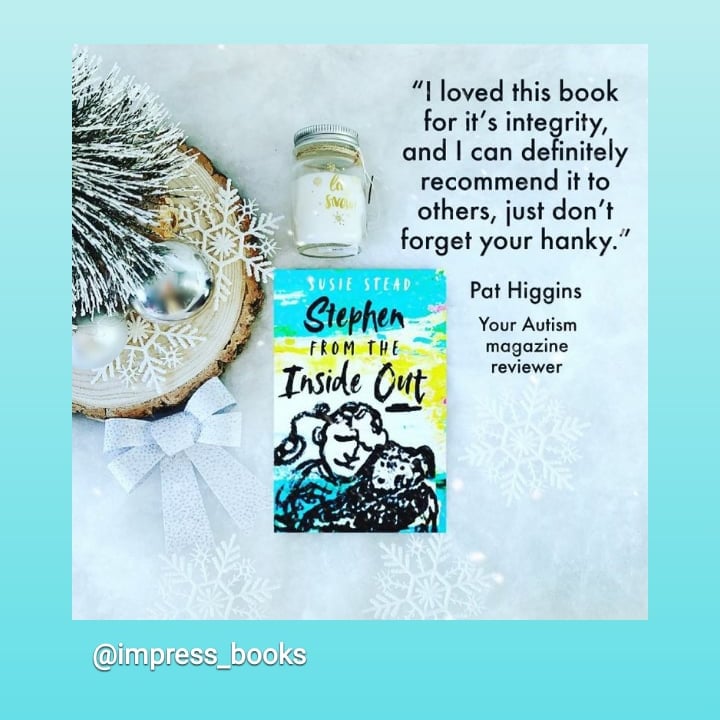
This book was written with Stephen’s permission. I read chapters back to him and incorporated some of his comments in the text (italics). It won the Impress Prize for New Writers in 2019, resulting in Impress Books publishing it on 2nd April 2021 (World Autism Day). Illustrations by my niece, E.K Mosley.

There are so many ways to describe a person and they all only touch a particular surface:

Stephen spent 25 years on psychiatric wards,

Stephen loved animals: “As he said with regularity to me (with no heart-warming exceptions), ‘I hate people, but I love animals.’

Aged 45, Stephen was diagnosed with Asperger’s syndrome, now referred to as Autism Spectrum Disorder (ASD)

Stephen had a lovely smile but insisted he never smiled as a child:

Stephen nods, repeating ‘never smiled’ and adds, ‘I never ate hard-boiled confectionery, you should write that down.’ He cannot abide the sound of the word ‘sweet’ and he doesn’t like me using it.

Stephen smoked probably around 40/day as an adult. When outside he would always stub out his cigarette butt, pick it up and take it to a nearest bin.

So many ways to introduce Stephen to you, but I will begin at the end and share with you the preface to the book:

……………………………………………………………………………………………………………………………..

PREFACE from ‘Stephen from the Inside Out’

It is 2018 and I’m sitting in a small room attached to a public library. I’m here to register Stephen’s death. It is strangely and repeatedly painful to have to keep telling people that he has died. Two days after it happened, I found myself sobbing in the changing room at a swimming pool. Grief surprised me.

The woman registrar facing me is kind and friendly as she asks me questions and fills in the death certificate. Date of birth? 3rd April 1955. Occupation?

In his whole life Stephen had only one paid job, as a road sweeper, and he lost that after a couple of weeks because he fell asleep. I refuse the description, ‘unemployed’. I consider Stephen for a moment, and then I know what to say.

‘Poet.’

‘Retired poet?’

‘No, just poet’

She writes ‘poet’ and then ‘widower’ and we carry on filling in the form, but a warm wave of pride, happiness and grief rises inside me. How I wish Stephen could see that title. He would chuckle with pleasure, or perhaps look at me solemnly and say ‘Susie, I am a poet!’

I’ve kept a copy of that certificate and every time I remember ‘Occupation: Poet’, a feeling of gladness fills me. ‘Poet’ affirms what was central and precious to Stephen, his love of words, the free spirit that would not be silenced.

When I first met Stephen, this was not what I thought. When I first met Stephen, he was a ‘poor soul with mental illness’ who just needed a little help. And I was going to help him.

………………………………………………………………………………………………………………………….

Stephen the poet

Stephen wrote his first poem when he was 11 years old. This next part is taken from Chapter 4 and all of Stephen’s dialogue is transcribed directly from the audio recording I took of the conversations:

Eventually we return to the school and to a seminal moment, when he wrote his first poem. He recounts this to me in the voice of one honouring the sacred: ‘ “The Passing of Steam”. You should write that down. I wrote it. I spent a long time writing it. Four o’clock one Monday afternoon. I wasn’t in detention at all. My English teacher stayed there. My English master was sitting at one end of the room and I was sitting at the other end. He was looking after me while I wrote it. I began writing it at four o’clock and I left there at half past five. I got the late half-past-five train. What a rollicking I got when I got home too! And I’d written that poem. I’d written that poem!’

This was the inspiration, the catalyst for Stephen’s creative direction in life. He carried on writing poetry for the next 50 years.

I’d also written what I call ‘sort-of’ poetry since I was a teenager. I didn’t understand what drove me, until I heard Padraig O Tuama, an Irish poet, explain that he wrote poetry to survive. This from a gay Irishman who lives in Belfast.

     I ask Stephen if he agrees with Padraig. ‘Absolutely right.’

Stephen’s poems are written by hand on A4 pads of lined paper with amendments and crossings-out. Whenever I can, I type them up before they disappear into the mole hills of old post office receipts, charity letters, shopping lists and care agency/DHSS correspondence.

Certain phrases and sentences strike me:

‘An acrylic sensation of despondent desperation and despair.’

‘As the rain so intensely and monotonously yet luminously falls tonight.’

And occasionally surprise me:

‘The sheer ecstasy of the intrepid blackbird protruding onto the waving branches of the tree.’

When I read this back, a deep delighted chuckle emerges from the armchair. ‘Did I write that?’ I confirm that he did and we both laugh with pleasure.

………………………………………………………………………………………………………………………….

I want to finish with a poem that Stephen wrote which I have slightly edited. I have not added anything, but have made a few cuts to shape the poem. This poem is not in the book.

Autumn Day in the Garden with the birds and Hope of a Better Future
Stephen - October 2011

Oh, the rapturous, enchanting song
of these ever captivating, enthralling birds –
They blend in so harmoniously and intricately,
a haze of effervescence
among the fading trees
and disintegrating leaves.

I ponder obsessively and contemplate
a scene of endless paradise and tranquillity,
ensuing from this agonising and yet futile strife.
Hope of an incomprehensible all-pervading rapture,
When travelling days are done.

WRITING – BEECH, BARK, BOOK

At the writing week 
ten years ago
I walked past the wild gory colours, 
glories of flowers
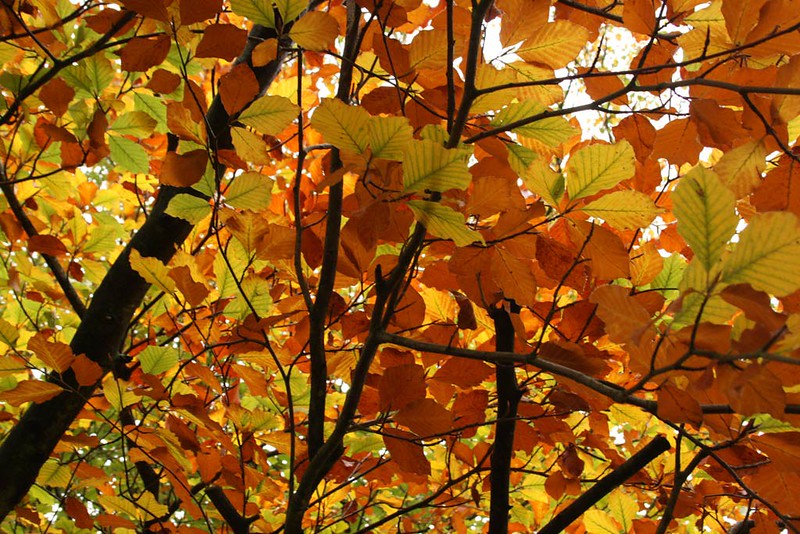
To stand in the still centre of beech,

Trees of wisdom, tall, elegant, generous,
allowing me entry to the sacred space,
the green stained window above,
Coverlet of countless leaves
Uncounted and yet counting
layering 
   light, 
           colour, 
                    texture
Layering beauty on beauty.

It was May and months to go
Before the beech washes her babies
In gold and lets them drop.

And I writing my first chapter of a first book
Not knowing how much it would cost,
Flowing out countless words, yet counted,
Layering one on another, 
light,
         colour, 
                                             texture of the story
So many words.

Beech, bark, book,
Both writing and being written
Inscribing, growing
Releasing into an unknown world.
Letting the babies turn to gold
And drop.

Did you know, beloved beech,
How much it would cost?

And how little in the end
That would matter?

The Space Between

I lie on my back and watch the clouds, squinting at the glare – blue sneaks through and the sun catches me.


Clouds like thoughts passing

Like thoughts there are layers – the lower layers of cloud pass more quickly, trotting past while the larger, mature clouds above seem to sit and ponder. Yet when I close my eyes for a few moments and open them again, the scene has changed beyond recognition. A blue sky with scraps of wool and tiny swirls of white, lies above me – where did all those clouds go? Where did all those thoughts go?

And now it’s hot. I sit up and see a tangle of butterflies hovering and flitting over a lavender bush nearby.

They drop and twirl
    float and catch
       those butterflies like my thoughts
          drawn by the sweetness of a spire of lavender

then distracted by another,
     lifted by the breeze,
          spinning in the light.    

All this air around us

All this space that we don’t account for because we experience it as having no colour, no solidity.

We walk through,

We see through;

Without that air, that space, we’d be locked in, locked up, trapped and dead.

I feel so gloriously grateful for this space between, that I cannot touch, cannot see, cannot smell, yet it gives me life.

What about the space where thoughts appear? The great sky of awareness?

The thoughts flit, ponder, twirl and hover, or like clouds, bring heaviness or rain. Sometimes they wounds us,but they do all pass. Like the butterflies and the lavender bush and the bugs landing on my arms they give colour and weight and interest but it’s all the space in between and around that lets me see them. It is the space that allows me to respond.

Quiet for the mind is like sky to the clouds – Give it plenty – glorious, rolling miles of it, tonnes of cubic metres of it.

Give those thoughts space to roll and skitter, 
    thunder and threaten, 
        gather and scatter, or 
             disappear leaving a fresh brightness.  

They are always gathering and scattering, 
     heavy clouds passing, blue sky piercing 
        and behind them all is always 

Awareness, clear and wide, beautiful and boundless.

Lie on the grass. Look up. Watch the clouds pass. See all the space between and know that it is not the space that is ‘in between’ but us, the clouds, the butterflies, the lavender bush that intersperse this space. The space was there before us, will be there after us, encompasses all.

Mary Oliver, I bow to your poem of the One World.


Poem of the One World, by Mary Oliver (from ‘A Thousand Mornings’)

This morning
The beautiful white heron
Was floating along above the water

And then into the sky of this
The one world
We all belong to

Where everything
Sooner or later
Is part of everything else.

Which thought made me feel
For a little while
Quite beautiful myself.

A Coronation – Bright and Beautiful?

The church crowns, The king reigns. Not my god. Not my king.

The church crowns, 

The king reigns,

eton and oxford alumni rule.

Peaceful protesters arrested.

A stain

On a perfect day of rain.


God save the king.

The god who puts 

‘the rich man in his castle,

The poor man at his gate’.

The god who makes us ‘high and lowly

And orders our estate.’*


Ho hum.  No change then.

No historic occasion,

just business as usual.


Not my god.  Not my king.


Ho hum. Let’s stop and sing a pretty song

about how anyone can become whatever they want,

if they work hard enough.


*From 3rd verse from ‘All things Bright and Beautiful’  written in 1848 in Mrs Cecil Alexander's Hymns for Little Children