NEW YEAR – LESSONS FROM A STAIRLIFT

My mother is 96 years old and still lives in her own home supported by carers and essential items like a stairlift that takes her up her old set of stairs around the corner near the top, delivering her finally at the landing.  It looks like the one below.

Anyone who has ever used stairlifts knows that they are not speedy but Mum rang up a few days ago, worried, as the stairlift had gone on a ‘go slow’ on her way up to bed the previous night, even stopping at a couple of points before carrying on.  She didn’t want to be left stranded half-way up the stairs as she can barely walk, let alone climb stairs.

The following morning, she and the carer (Gloria) had rung the company to get an engineer to come out.  We didn’t have insurance so they needed pre-payment of the £150 call out fee first.  I have financial power of attorney so I rang them up, waited for the requisite 10 minutes on the phone and was thinking of just using the website, which the automated voice kept urging me to do, when finally, a real voice came on the phone.  Or at least it sounded real.

Waiting for someone to answer proved a very useful pause. 

Pauses are one of the most useful things that you can do in life before making a decision.  Especially mindful pauses.  I don’t always remember.

In that pause I had an idea.

The voice was still rather automatic, asking my details, preparing to take payment when I asked if there was something we could actually do our end first.  I hit gold.  The voice lit up and became an animated and helpful person 😊. Yes, we could do something, Hurrah!

After explaining to me in detail about using a remote control, which gave me heart palpitations because I had no idea where it was and hadn’t see it for over a year, he then changed tack and it turned out we didn’t need a remote control at all.

‘There’s a panel on the stairlift which shows up a code and if something is wrong there’ll be a J3 or an E something or possible another number.’

He then went on to say that from my description it was probably a J3 problem.   He explained carefully, not in techno speak but in easy, homely language (Thank you!):

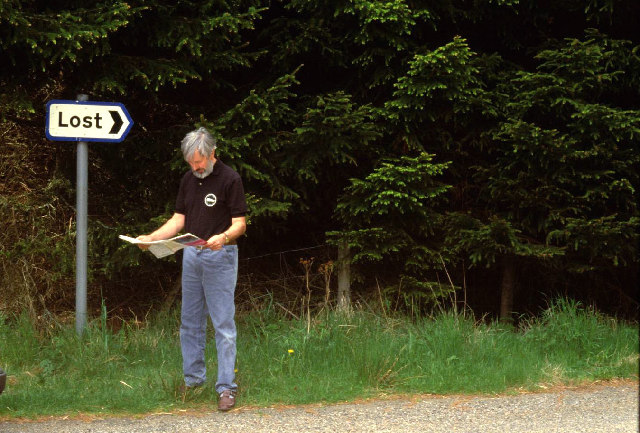
‘The stairlift has to go around a corner to get up the stairs.  In order to do that, it has to have a map in its system.  Sometimes the map disappears and it gets lost.’

It sounded rather sweet that a stairlift could get lost.

He carried on:

‘Because it is lost, it goes very slowly because it doesn’t know where the corners are and it will sometimes stop.  It can also tip slightly if it’s expecting to go round a corner.’

Why do I feel so much empathy for this stairlift?

He finishes:

‘For it to reset, it needs to go back to the top of the stairs because that is “home”.  Once it is there it will beep and then reset itself.’

The stairlift just needed some help getting home.  I know that feeling.

It turned out to be a team effort. 

Having thanked him profusely, I then rang Gloria and we had to go through the whole procedure on the phone as I live 100 miles away.  Gloria discovered that she had no idea how to use the stairlift.  I know it should be easy but I’d also been stymied by it, when visiting at Christmas.  It was my 96-year-old mother who was the expert here, so I waited while Gloria helped my mother out of her chair, into her wheelchair, and then over to the stairlift.

Mum’s job was to keep the stairlift moving while Gloria followed her up the stairs, watching the numbers and shouting down the phone at me

‘It’s saying A2’

‘that’s the right code, the man says’.

They got to the top and then repeated the process going down.

‘It’s saying A3’

‘That’s correct for going down.’

The stairlift had worked perfectly on both journeys.  It became evident that it had reset the previous night when my mum parked it at the top. We saved £150 and it’s been fine ever since.

It just got a bit lost and it needed to get home to regain its bearings.
That is my story for the New Year, and indeed for anytime that you notice you are feeling lost and overwhelmed… (by personal stuff or world news).

Now take a moment to recognise what state you are in: Maybe you’re going slow, stopping, unsure of your bearings.

What you need to do is come home.

What a relief. 

Instead of rushing out to find someone or something to fix you (often at high cost), you simply come home.

How do we come home?

You know. Listen to yourself.  You have your ways. 

Some of my ways of coming home are: meditation, walking in nature, especially amongst trees or by the sea. Also, poetry, music.  Also taking time to cook a good meal, snuggling up with someone I love and a good book.  Sometimes I need to be on my own, sometimes I need to touch base with someone else.

This morning, I was feeling lost, a minor swirl of frustration, mainly with myself.  I recognised it.  My reset button this morning was to go and find Tim, who hugged me and brought me home.

Below is a poem that I love.  It is a deeply embodied, coming home.  It is by Jane Hooper. I cannot find a book source.  I quote the first part of it.

Please Come Home
by Jane Hooper


Please come home.
Please come home.
Find the place where your feet know where to walk
And follow your own trail home.

Please come home.
Please come home into your own body,
Your own vessel, your own earth.
Please come home into each and every cell,
And fully into the space that surrounds you…
Please come home.
Please come home to trusting yourself,
And your instincts and your ways and your knowings,
And even the particular quirks of your personality.
Please come home.

Please come home and once you are firmly there,
Please stay home awhile and come to a deep rest within.
Please treasure your home. Please love and embrace your home.
Please get a deep, deep sense of what it’s like to be truly home.
Please come home. Please come home.


ALL YOU NEED IS LOVE

Why can’t we just love one another?

The Guardian Newspaper at one stage years ago, offered the big questions for readers to respond to.  One of them was ‘Why can’t we just love one another?’ 

Various answers came in – someone in Newcastle replied, ‘because some people come from Sunderland.’

What would you reply? Because some people are dangerous, selfish bastards, murderers, dictators? or billionaires, gypsies, crusties, communists, fascists, woke? maybe they belong to a particular nationality or religion? Or maybe they hurt you deeply.

How do we reach across that divide? Or do we even want to? As I said in my previous blog, we all have our different lenses with which we see the world and other people and that affects how we respond to them.

all images created by my niece E.K.Mosley for my book ‘Stephen from the Inside Out’

In my 20s I was one of those who thought that all you need is love.  I was inspired by Jesus who said ‘love one another as I have loved you.’  I lived in an intentional Christian community on the North Devon Coast for 2 years and then worked for 3 years in a Christian residential drug rehab for women. Many of them had been thieves and/or prostitutes to fund their drug habits.  One told me she had sold her mother’s 3-piece suite while her mother was out.  Many had been sexually/physically abused as children. Most, if not all of them, had begun serious drug habits by the age of 12 or 14.  One told me of injecting bleach. Then and now, my body tenses with horror at the thought of what drives a person to do that.

Yet…. Yet… She is the one who gave me the mug below.  The mug which says ‘a beautiful day begins with a little love.’  I still have that mug and if the woman who gave it to me ever reads this, thank you, D.

The other side has a picture of a rainbow.

Yes, some found better lives, but many left to return to drugs, some died. The suffering was deep.

Later I married Tim, moved, worked as secretary and was also part of a church that housed homeless people in the church building. A few would join us for the daily evening services. They were all welcomed.  We would stand in a circle round the altar in the middle of the large gloomy Victorian church with the vicar blessing the bread and wine. We’d be a motley collection of maybe 15 to 20 people: quiet elderly ladies, unwell people muttering, people in work clothes, monks in holy robes, and the occasional drunk man (almost always men) swaying slightly to stay upright and making inappropriate comments. One told me he didn’t expect to live till he was 30. He never did.  I didn’t know anything about his background but I did see the scars on his arms from cutting himself.

My faith at the time, held out that love conquered all, that in ‘the end’ it would all work out. The fact that I was part of a group of people, a church community that welcomed everyone helped me sustain this. But I still felt like screaming at times.

After 4 years, Tim and I left that city, moved 3 times and had 3 children.  6 years later we moved to a suburban area.  By then Tim was a church vicar. It was here that I met Stephen who was under section at a local psychiatric hospital.

I invited him to coffee once a week and occasionally took him to the church but people there avoided Stephen. He had a wary institutional look, wore baggy clothes with cigarette burns. He was tense and restless, would ask people for money and mutter dark things under his breath.   I felt indignant on his behalf but I was also finding him challenging.  He wanted to visit or ring me whenever he wanted. Guilt told me I should say yes but Self Preservation was putting up a fight.

Below is an extract from ‘Stephen from the Inside Out’ chapter 2 (please note that I read chapters back to him and he commented. These comments are in italics):

……………………………………………………………………………..

Stephen kept reminding me I was a Christian, that I was following someone who preached the way of love. ‘Love your neighbour as yourself’, ‘If someone asks, give’. I’d been a fully paid-up Christian for 17 years. What was the matter with me?

In my mind, rather floridly, the Guilt Queen, 
meticulously dressed, appears;
one smart shoe firmly on the windpipe of Self-Preservation.

No-one was helping to share the load and I couldn’t lift the weight.

The Guilt Queen purses her lips:
‘no-one said it would be easy, Susie’.

One Sunday I was standing on the drive of our house with Stephen. He was expecting to come in. I waffled. I fumbled. I said very nicely that it wasn’t a good time for him to come over today. He wasn’t taking the hint. He glowered at me, grumpy and miserable. He didn’t want to go back to the hospital. It was horrible there. Horrible. Horrible. Horrible. Did I know how horrible it was?

The Guilt Queen stands behind Stephen,
inspecting a booklet entitled,
“Hypocrites of the 20th Century”.
She holds Self-Preservation in a headlock.

Did I know how horrible it was?Yes, I knew, yes, yes, yes of course… He pulled his trump card: ‘If you were Jesus, you’d invite me in’.

Suddenly Self-Preservation emits an elemental roar.
Guilt Queen is thrown. White noise.

‘I’m not bloody Jesus!’  I screeched into his face, before storming off, slamming the front door and bursting into tears.

Tim, my lovely husband and also vicar of the church, offered some basic theology,

‘You’re right. You’re not bloody Jesus.’

He then added, ‘If Stephen turns up whenever he wants, you’ll end up being overwhelmed and shutting him off for good and then nobody wins. Lay down some ground rules.’

Stephen surprises me by leaning forward and firmly agreeing with this: ‘Obviously, I needed some ground rules. I didn’t have to go back there. I was informal, I could have gone somewhere else. There was no excuse for my behaviour. All I can do is apologise. Quite frankly, I was a menace.’ He warms my heart; I hadn’t even thought of the other options available to him.

Without that piece of crucial advice, my connection with Stephen would never have survived.

………………………….

Why can’t we just love one another?  What do we even mean by love? Jesus’ version was pretty hard core although he is miss quoted. He said ‘love one another as you love yourself’ – that last bit gets lost.

I grew up with a mix of love being about ‘being nice’ and also ‘being kind to those less fortunate than myself’ and very little about loving myself because (and it was true) I was very fortunate.

As a result, I didn’t feel able to be direct, so relied on people to know social etiquette: not overstaying their welcome, not ringing me at 2am or asking me for money.   I did not understand that love might mean holding my own, being clear, even if I am ‘more fortunate’ than them. That love might mean, knowing that I too have needs and vulnerabilities. Perhaps most important, that maybe love means acknowledging I’m part of the mess, not above it all.

It was a vital awakening and it took me years to wake up to the fact that the problem was not Stephen – Stephen could not be anything other than he was. That was his gift.

Stephen never did ‘get better.’  He lived intensely.  He suffered and he enjoyed the moments that he could.  Below are 2 poems of his, one on a good day and one on a bad day:

POEM ON A GOOD DAY

'Ah the radiant beauty and scintillating charm

of the resplendent flowers, illuminating

the tranquil propensity of the garden

in the bright shining sun.

The persistently beautiful rhythm of the birds

chanting their ecstatic songs.'

Stephen
AND ON A BAD DAY

'This Life –

ah this wretched Life –

for me it seems to have no purpose, no point –

just an agonising struggle –

and I am not strong enough to overcome.

Alas, I am afraid I am not.'

Stephen

So… what about ‘all you need is love’?  Do I still think that? no. I still go with ‘Love others as you love yourself,’  but I see it as a practice.  We practise loving ourselves and others.  We practise receiving love from others. And we practise not expecting an outcome or thanks.  That, in my view is a more than a life’s work.

'In our love,
however little,
we create a web
which breaks a person's fall.'

S.Stead

WRITING – BEECH, BARK, BOOK

At the writing week 
ten years ago
I walked past the wild gory colours, 
glories of flowers
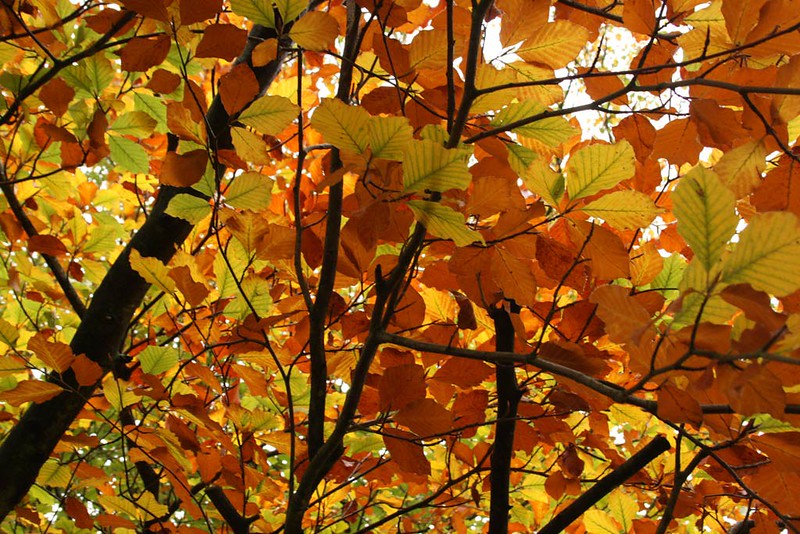
To stand in the still centre of beech,

Trees of wisdom, tall, elegant, generous,
allowing me entry to the sacred space,
the green stained window above,
Coverlet of countless leaves
Uncounted and yet counting
layering 
   light, 
           colour, 
                    texture
Layering beauty on beauty.

It was May and months to go
Before the beech washes her babies
In gold and lets them drop.

And I writing my first chapter of a first book
Not knowing how much it would cost,
Flowing out countless words, yet counted,
Layering one on another, 
light,
         colour, 
                                             texture of the story
So many words.

Beech, bark, book,
Both writing and being written
Inscribing, growing
Releasing into an unknown world.
Letting the babies turn to gold
And drop.

Did you know, beloved beech,
How much it would cost?

And how little in the end
That would matter?

The Space Between

I lie on my back and watch the clouds, squinting at the glare – blue sneaks through and the sun catches me.


Clouds like thoughts passing

Like thoughts there are layers – the lower layers of cloud pass more quickly, trotting past while the larger, mature clouds above seem to sit and ponder. Yet when I close my eyes for a few moments and open them again, the scene has changed beyond recognition. A blue sky with scraps of wool and tiny swirls of white, lies above me – where did all those clouds go? Where did all those thoughts go?

And now it’s hot. I sit up and see a tangle of butterflies hovering and flitting over a lavender bush nearby.

They drop and twirl
    float and catch
       those butterflies like my thoughts
          drawn by the sweetness of a spire of lavender

then distracted by another,
     lifted by the breeze,
          spinning in the light.    

All this air around us

All this space that we don’t account for because we experience it as having no colour, no solidity.

We walk through,

We see through;

Without that air, that space, we’d be locked in, locked up, trapped and dead.

I feel so gloriously grateful for this space between, that I cannot touch, cannot see, cannot smell, yet it gives me life.

What about the space where thoughts appear? The great sky of awareness?

The thoughts flit, ponder, twirl and hover, or like clouds, bring heaviness or rain. Sometimes they wounds us,but they do all pass. Like the butterflies and the lavender bush and the bugs landing on my arms they give colour and weight and interest but it’s all the space in between and around that lets me see them. It is the space that allows me to respond.

Quiet for the mind is like sky to the clouds – Give it plenty – glorious, rolling miles of it, tonnes of cubic metres of it.

Give those thoughts space to roll and skitter, 
    thunder and threaten, 
        gather and scatter, or 
             disappear leaving a fresh brightness.  

They are always gathering and scattering, 
     heavy clouds passing, blue sky piercing 
        and behind them all is always 

Awareness, clear and wide, beautiful and boundless.

Lie on the grass. Look up. Watch the clouds pass. See all the space between and know that it is not the space that is ‘in between’ but us, the clouds, the butterflies, the lavender bush that intersperse this space. The space was there before us, will be there after us, encompasses all.

Mary Oliver, I bow to your poem of the One World.


Poem of the One World, by Mary Oliver (from ‘A Thousand Mornings’)

This morning
The beautiful white heron
Was floating along above the water

And then into the sky of this
The one world
We all belong to

Where everything
Sooner or later
Is part of everything else.

Which thought made me feel
For a little while
Quite beautiful myself.

A Coronation – Bright and Beautiful?

The church crowns, The king reigns. Not my god. Not my king.

The church crowns, 

The king reigns,

eton and oxford alumni rule.

Peaceful protesters arrested.

A stain

On a perfect day of rain.


God save the king.

The god who puts 

‘the rich man in his castle,

The poor man at his gate’.

The god who makes us ‘high and lowly

And orders our estate.’*


Ho hum.  No change then.

No historic occasion,

just business as usual.


Not my god.  Not my king.


Ho hum. Let’s stop and sing a pretty song

about how anyone can become whatever they want,

if they work hard enough.


*From 3rd verse from ‘All things Bright and Beautiful’  written in 1848 in Mrs Cecil Alexander's Hymns for Little Children

IMBOLC/CANDLEMAS – SPRING IS COMING!

The first of February!  Imbolc in the Celtic calendar marks the beginning of spring, the light returning, life emerging.  A time for inspiration and new beginnings, allowing the life in us to push through all that hard cold earth!  If a snow drop can do it… so can we.


‘Many, many welcomes,
February fair-maid,
Ever as of old time,
Solitary firstling,
Coming in the cold time,
Prophet of the gay time,
Prophet of the May time,
Prophet of the roses,
Many, many welcomes,
February fair-maid!’

The Snowdrop, by Tennyson


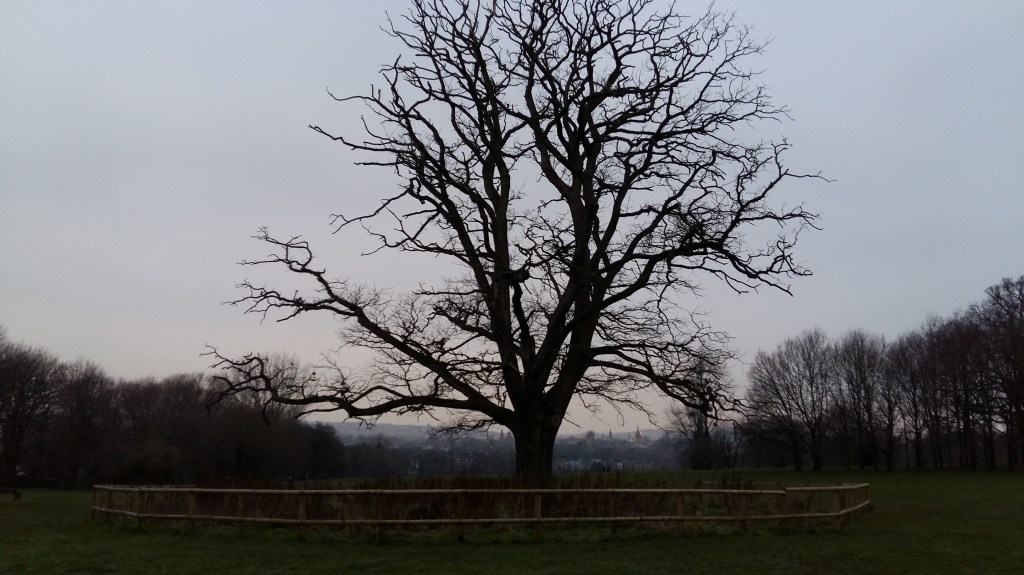
This morning, Monday 1st February,  at 6.30am our household gathered in the trees at the top of South Park in Oxford.  It wasn’t fully dark because of the various lights from the roadsides and coming up from the city but it was grey and chilly and very beautiful with the trees patterning their branches against the dark sky.

Someone read a poem and we sang a chant:

Light emerging, Spring is near,  life emergent, we are here.

After this we went our separate ways to find a place to stand, to notice nature and the very slow lightening of the sky.  We had thirty minutes before rejoining one another.

I felt an exhilaration being up this early, no-one else in the park, only the distant movement of occasional cars on the roads.  The birds were welcoming a daylight that had not arrived, some with such sweet staccatos and others like the rooks, cackling and bawling out their hellos!

I found my way to the huge oak at the centre top of South Park which overlooks the city and I stood leaning against her, feeling her rough support,  feeling the solid, rooted homeliness of this being.  I asked her for any advice and the words that came to me were, ‘heal the roots’.

I thought of the roots of the tree, how deep and wide they run..  The roots are vital to the life of the tree but also to its connection with other trees.

Over the last few years the human race has been discovering that trees communicate with each other and share nutrients through their roots and through fungal networks. The fine, hairlike root tips of trees join together with microscopic fungal filaments to form the basic links of the network, which appears to operate as a symbiotic relationship between trees and fungi. This network has been called ‘The Wood Wide Web’!


Peter Wohlleben has written a beautiful book entitled “The Hidden Life of Trees” and he says that all the trees  ‘in every forest that is not too damaged, are connected to each other through underground fungal networks. Trees share water and nutrients through the networks, and also use them to communicate. They send distress signals about drought and disease, for example, or insect attacks, and other trees alter their behavior when they receive these messages.’  (https://www.smithsonianmag.com/science-nature/the-whispering-trees-180968084/)


It seems to me that we the human race could do with healing our roots, healing the vital connections that are between us.  One of the ways we might  do this is to start digging up our certainties, the ones that crush the possibility of connection, of love, of hope –with ourselves, with others and with this good earth.  I am hoping to do some gentle digging over this year.

THE PLACE WHERE WE ARE RIGHT

Yehuda Amichai (translation by Chana Bloch and Stephen Mitchell)


From the place where we are right

Flowers will never grow

In the spring.


The place where we are right

Is hard and trampled

Like a yard.


But doubts and loves

Dig up the world

Like a mole, a plow.


And a whisper will be heard in the place

Where the ruined

House once stood.


Writing is Impossible!

Writing a play is impossible.

I thought this.

It was too long, too complex

To hold the structure.

Yet one day I began.

I wrote short sketches

5 minutes long

10 minutes long.

Others performed them.

First, they grew like daisies

Then they grew like roses.

The smell was glorious,

Intoxicating,

I began to write more.

They became knotted wood

And branches,

Saplings swaying to the music.

Now

Writing a book is impossible.

It is too long, too intricate

To hold the structure.

How do they do it?

And then one day I began.

FINISHING MY DRAFT FOR THE BOOK

‘STEPHEN FROM THE INSIDE OUT’

On Friday 9th October, the day before World Mental Health Day, I completed my penultimate draft for the book, ‘Stephen from the Inside Out’!   Here is an extract from the back cover ‘blurb’:

‘From the outside…  Stephen struggled for most of his life with severe mental health issues, endured 25 years inside British psychiatric wards and never felt acceptable in the ‘normal’ world.   From the inside… here was a man with powerful convictions, deep longings, wide interests and an incapacity to be anything other than himself, whatever the cost. This is his story, inside and out; a story of grave injustices, saints and bigots, a faithful dog, a wild woman, a fairy godmother and angels hidden in plain sight. It is also the story of the author, Susie, who started off by wanting to ‘help’ Stephen ‘get better,’ but then found out it was somewhat more complicated than she’d anticipated.

In 2012, this book was a seed in my mind.  Stephen agreed to me writing the book but how to begin? We met up regularly and I recorded our conversations.

In 2014  Kate Clanchy, author and poet, agreed to mentor me. Every now and they she would issue vital advice.

At the beginning: Weave in the history of mental health in this country but only sparsely – keep the story moving forward.

Which I did.

Then: Go on an Arvon Course to complete your first chapter.

Which I did.

Near the end of my first draft: Send it out and get used to rejections. 

Not so easy. But I began.

You might like to apply to a competition run by a publisher.

I applied to the Impress Prize for New Writers.

And got to the last 10. But I’m not going to win.

And then I won.

Won £500 plus the promise to publish.

Now 10 months later, in October 2020, after 14 drafts,  I’ve handed in my draft to a copy editor, to be ritually disembowelled. I’ve spoken to him and trust him to use a clean sharp knife.

I’ll see you on the other side.

Coming back to what matters

About 16 months ago, I and Tim left an entire way of life behind.  About 13 months ago a friend of mine, Stephen, left his entire life behind because he died. Within the space of 4 months, three friends of mine died. On the day I was told that Stephen had died, 13th August 2018, I had just spent the morning reflecting & brainstorming, ‘what is my deepest wish?’


In writing down the thoughts,  the most repeated phrase was ‘I do not want to be afraid’.  It finally formed into the following: My deepest wish is to play – to allow myself to make different patterns in the sand of my life and then allow the tide to wash them away.


As I finished writing , the phone rang and a voice said ‘Are you sitting down? Stephen has died.’


PLAYING LIFE AND LETTING GO  

I will play in the sand of my life

because it is sand

And its

Running

Through my fingers


Let us play together,

Let us build strange structures

Dig ditches

and fill with them water.

Let us create

Extraordinary shapes in

the sand and delicate

Patterns with shells and

Stones.


Let us play together

Create together

Argue

Fight

Laugh


Then watch the sea

In leisurely fashion

Erase

Our precious

Designs


And let them go

And let them go.


Over the coming year I played.  It was very serious play.  I discovered what it was like to be the executor of Stephen’s will, to become a mindfulness teacher,  to live in a home that was not public property (ie belonging to the church), to live without a car, and many other things.  I also discovered Extinction Rebellion.

What I kept finding was that I’d appreciate something valuable and then get carried away into planning, angsting, plotting or being utterly overwhelmed and then lose touch with the original experience.  Meditation would eventually bring me back.  That is one of the beauties of mindfulness.


So, with Climate Change and Extinction Rebellion.  I feel a deep love for this good earth:  my dog’s hairy face, the hundred different shades of green in the garden,  the crunch and taste of cox’s apples, the view from a hill I’ve just climbed…  Then I get caught up, rushing, worrying about whether to get arrested or not, becoming in turn furious, despairing and weepy over the burning of the rainforests, the destruction of the coral reefs and more.   That is not to be avoided but I also need to keep coming back to what matters, to let ‘the soft animal’ of my body love what it loves (see below: Wild Geese, by Mary Oliver).


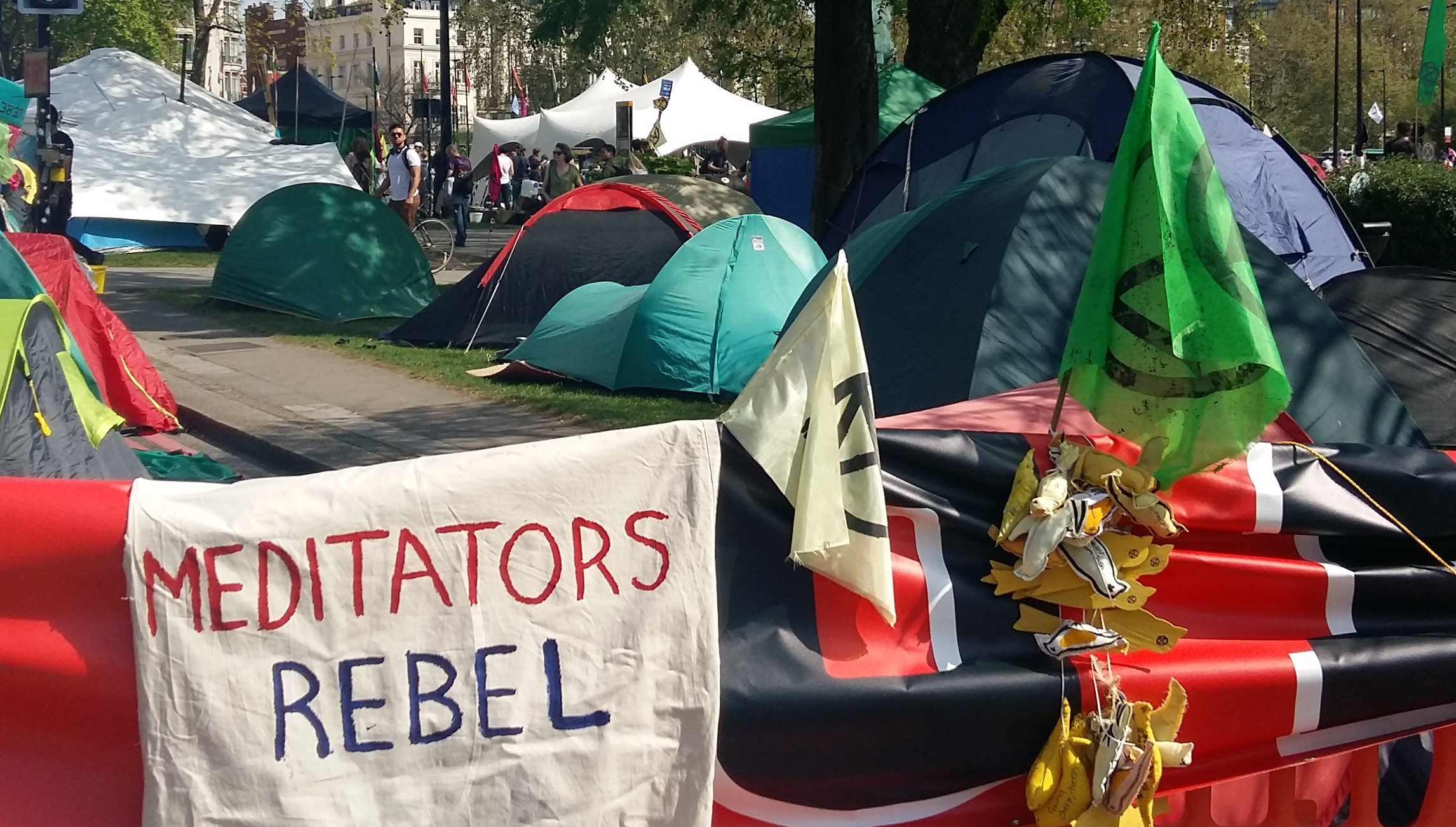
In April, Tim set up an Extinction Rebellion Meditators Group,  a group of meditators who want their action to come out of their meditation, and in keeping with the ethos of Extinction Rebellion, want to respond deeply to this climate crisis, not react by pursuing a narrow ‘solution’ or finding enemies to hate.

It’s quite a challenge!  The group helps anchor me and keep me coming back to what matters:  connecting with the earth, myself, others, – discovering what contribution we can make, not only in relation to the climate crisis but in relation to what sort of people we want to be, what sort of society we want to live in.

Last year, two weeks before my friend Stephen died, I visited him in the nursing home he was in.  He was only 63 years old but by now he was an invalid.  He was in a wheel chair but he’d survived so much, it didn’t occur to me that he’d be dying anytime soon.  I had to travel 100 miles to visit him and was going to ‘fit in’ a visit to someone else as well but just in time, I recognised that push to ‘efficiency’ and chose deliberately not to do that and therefore not be rushed.

In the event, we sat on the porch outside his nursing home for nearly 3 hours, mostly in silence, as the sun slowly went down.  He’d had a lifetime of mental health issues and was struggling with his ‘voices’, I was struggling with the desire to ‘get on’ and with the irritation of having to light his cigarettes every 15/20 minutes by walking over to my car where there was fixed lighter.  Yet still, for large chunks of time we sat peaceably together.  When the nursing assistant came out to collect him, I said with feeling, ‘Thank you Stephen,’ meaning, thank you for the space to sit in silence together, to watch the sky change colour, to be present, to be here.  And Stephen said ‘Thank you for sitting with me’.

That was the last time I saw or spoke to him before he died.


What is your deepest wish? Or wishes.

What is it that matters most deeply to you?

Make time to remember


Wild Geese – by Mary Oliver

You do not have to be good.
You do not have to walk on your knees
for a hundred miles through the desert, repenting.
You only have to let the soft animal of your body love what it loves.
Tell me about despair, yours, and I will tell you mine.
Meanwhile the world goes on.
Meanwhile the sun and the clear pebbles of the rain
are moving across the landscapes,
over the prairies and the deep trees,
the mountains and the rivers.
Meanwhile the wild geese, high in the clean blue air,
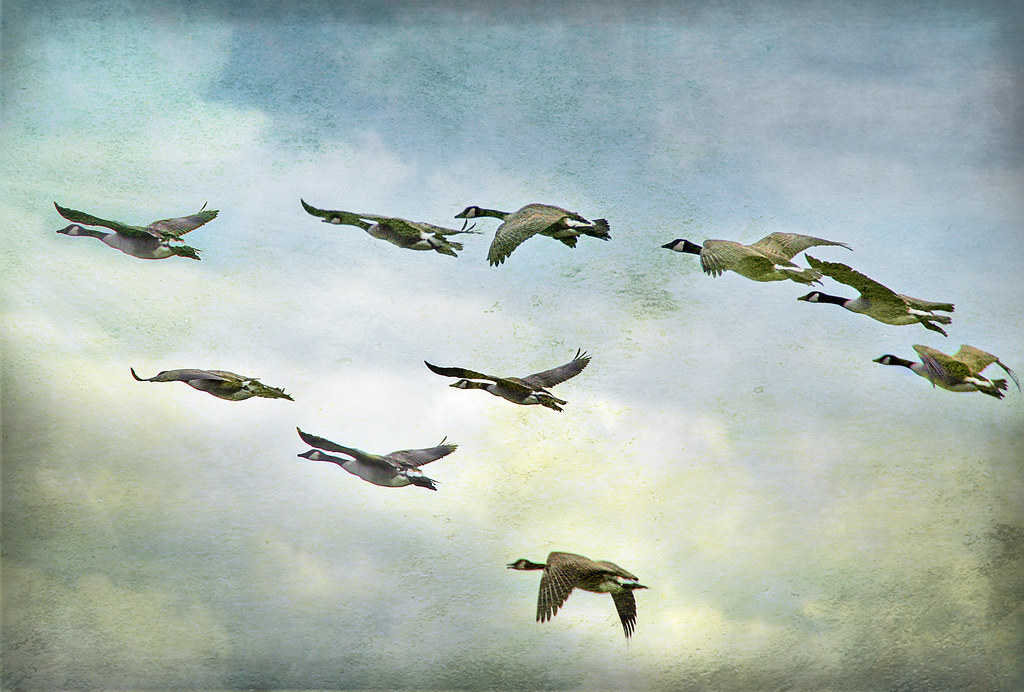
are heading home again.
Whoever you are, no matter how lonely,
the world offers itself to your imagination,
calls to you like the wild geese, harsh and exciting-
over and over announcing your place
in the family of things.

https://www.flickr.com/photos/calliope/5300846002


‘You do not have to be good’ – a tribute to Mary Oliver, poet

‘You must not ever give anyone else the responsibility for your life’


Mary Oliver, U S poet, Pulitzer prize winner and inspiring human being, died on 17th January aged 83.  One of her most famous poems, “Wild Geese” begins:

‘You do not have to be good.

You do not have to walk on your knees

for a hundred miles through the desert repenting.’


You do not have to be good – Every time I read that sentence, my shoulders drop in relief.  For over 12 years now, my intention has been to become more ‘real,’ rather than ‘good’ and for the last 5 years the poems of Mary Oliver have kept me company.  Like many others, I’ve been brought up to be ‘good’ and not to attend to my needs or pay attention to what I want in life.  As a result, I would not ask directly for what I wanted and often didn’t even know what I wanted.  Instead my tendency was towards the ‘passive aggressive’ approach: ‘I won’t tell you what I need but I’ll make it clear how disappointed I am that you didn’t work it out through ESP and do it anyway.’

But I’m changing!

Mary Oliver’s poem, ‘The Journey’ is that call to listen to yourself.  It begins:

‘One day you finally knew
what you had to do, and began,
though the voices around you
kept shouting
their bad advice —
though the whole house
began to tremble
and you felt the old tug
at your ankles.
“Mend my life!”
each voice cried.
But you didn’t stop.


You knew what you had to do…’


For some of us the bad advice, the voices calling, are mostly external and for some its all inside our heads but those voices, that advice can be so strong, so undermining of our confidence in our own voice, our own experience.

Its painful recognising our patterns of response and changing them but it is also liberating and delicious when we realise we are not trapped!

Mary Oliver was a gay woman who found her life partner, Molly Malone Cooke in 1964,  ‘I took one look and fell, hook and tumble’.  They lived together for over 40 years before Molly died in 2005.  After she died, in ‘A Pretty Song’ Mary writes ‘From the complications of loving you, I think there is no end or return.’

Mary Oliver never explicitly wrote about this side of her life but I would recommend  a read from  https://lithub.com/on-the-overlooked-eroticism-of-mary-oliver/ written by Jeanna Kadlec.  Jeanna remarks how Mary Oliver’s poems gave her hope as a young gay woman:

‘For me, someone who grew up in the evangelical church, the experience of reading “Wild Geese” has often been about receiving permission to desire within my own body: I do not have to be good; I do not have to repent.

‘You only have to let the soft animal of your body love what it loves.’

Whatever our faith/non-faith position is we all have an idea of what ‘good’ is that matters to us. It might be being good ‘morally’ or good in relationships or ‘following God”, or changing the world for the better in one way or another.  But unless we begin by seeking authenticity, the ‘goodness’ lark will either whiplash back on us (what a hypocrite/lousy mother/shit friend I am, etc|)  or the whip will land on others (they ‘should’ be…) .  So instead when I remember, I practice being real, bringing awareness and acceptance of myself as I actually am, having compassion for this human being here at this moment. It’s a life’s work.

For Mary Oliver, her work was to love and be amazed by this world.  It was mostly the natural world but not always.  In the poem ‘Singapore,’  Mary Oliver finds herself in the airport toilet when she notices a woman cleaning ashtrays in the toilet bowl:

‘Disgust argued in my stomach

And I felt in my pocket, for my ticket.

A poem should always have birds in it….’

But she stays and then,

‘When the woman turned I could not answer her face.

Her beauty and embarrassment struggled together and

neither could win.

She smiled and I smiled.  What kind of nonsense is this?

Everyone needs a job.’

And later


‘I don’t doubt for a moment that she loves her life.

And I want her to rise up from the crust and the slop

And fly down the river.

This probably won’t happen.

But maybe it will.

If the world were only pain and logic, who would want it?

Of course, it isn’t.


Neither do I mean anything miraculous, but only

The light that can shine out of a life.  I mean

The way she unfolded and refolded the blue cloth,

The way her smile was only for my sake; I mean,

The way this poem is filled with trees and birds.’


I want to finish with one of Mary Oliver’s poems in its entirety.  It is called “When I am among the Trees”.  Trees don’t worry about being ‘good’,  they simply ‘are’ what they are, with their roots deep down in the soil connecting with this world and their branches and leaves reaching out to the light.  If you haven’t already done so, try standing against a tree for 20 minutes, feeling the bark supporting your back, looking up through rich layers of leaves or perhaps bare branches sharp against the sky, smelling the air, listening to sounds, breathing. Its a gift.


When I am among the trees,
especially the willows and the honey locust,
equally the beech, the oaks and the pines,
they give off such hints of gladness.
I would almost say that they save me, and daily.

I am so distant from the hope of myself,
in which I have goodness, and discernment,
and never hurry through the world
but walk slowly, and bow often.

Around me the trees stir in their leaves
and call out, “Stay awhile.”
The light flows from their branches.

And they call again, “It’s simple,” they say,
“and you too have come
into the world to do this, to go easy, to be filled
with light, and to shine.”


Thank you, Mary Oliver, for the light you have shone on my life.


Breaking Free and Shedding a Skin – Part 2

It’s worth it!

Sometimes in order to break free, to grow, we need to shed the skin of our lives. Snakes shed their skins as they grow.  Maybe they have something to teach us.

Back in October 2017, after 23 years, Tim and I decided that we’d stop being a vicar and vicar’s wife.  In April this year we left an entire way of life, a community and the vicarage where we’d lived for the last 10 years.  In March, after further reading on how snakes shed their skins, I wrote the poem below.


SHEDDING YOUR SKIN – PART 2


The skin has come off.

It lies there coiled on the floor.


The hardest bit was starting

At the head.

Rubbing at 30 years of habit.

Worrying it, dislodging

thick protective certainties.

Finding the sharp necessary stones

To pierce the old skin.


That first breaking!

That relief!

                      Beginning to breathe easily                     .

Smarting with the rawness.

Then, seeing more clearly

How trapped I’ve been.

Rage rising

Spitting out of me, spurring me on.


Tearing, scratching, I look around for help,

Some cannot see the problem,

Others irritate and poke.

But there are those who celebrate,

Thank you!

Affirming, soothing, loving,

They apply a gentle pressure for me

To pull against.


Then the slow, slow, moving

Wrinkle by wrinkle out of the casing.

Cell by cell

Whole sections peeling off gloriously

While others snap and tear.

The tail snatches at the last of the skin

Trying to find a purchase

But it’s too late. I’m out.

I am out.


I stretch and feel the rippling flex of flesh

No tightness at the eyes.

Or pressure on the chest.

The vast expanse of ‘new’

Is fresh and frightening.


The old skin lies useless,

dry, translucent,

Beautiful designs

Etched into the calcified cells.


I need to rest and hide awhile.

I leave the old skin behind.


I don’t look back.